August 24, 2020

Kenosha police shoot man; video of incident appears to show officer firing several shots into his back at close range

  40th St and 28th Ave

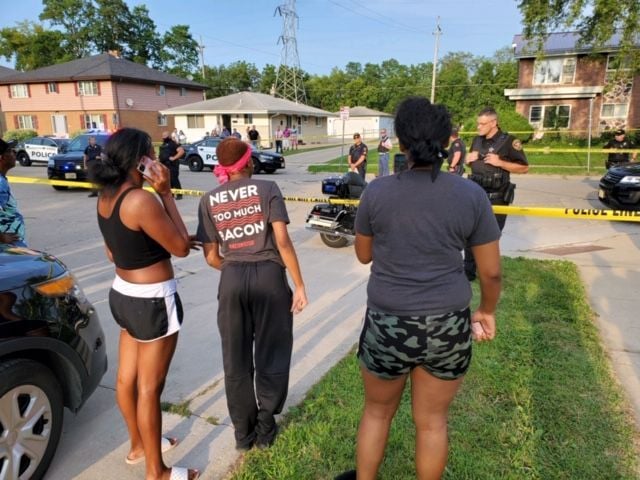
A man, identified as Jacob Blake, was in serious condition at a Milwaukee-area hospital after he was shot when officers were sent to the 2800 block of 40th Street late Sunday afternoon for what police called a domestic incident.

More than 60 people were gathered following the shooting at the scene with several saying that the Black man was trying to break up a verbal altercation between two women shortly after 5 p.m.

According to a police department press release, Kenosha police were sent to the incident at 5:11 p.m. and were subsequently involved in an officer-involved shooting.

According to the release, officers provided immediate aid to the man, who was transported via Flight for Life to Froedtert Hospital in Wauwatosa. The man was in serious condition. Police radio traffic indicated that a landing zone was established at Bradford High School just before 5:30 p.m. and the man was then transported.

Dozens of squad cars from the Kenosha Police and Kenosha County Sheriff’s department and Wisconsin State Patrol converged in the Wilson Heights neighborhood, lining the streets approaching the scene.

The incident was being turned over to the Wisconsin Department of Justice, Division of Criminal Investigation, which will be investigating the officer involved shooting.

At least a half dozen witnesses said that the man had tried to break up a fight between the two women outside a home at 2805 40th St. and that police had attempted to use a Taser on the man prior to the shooting. Then, they heard at least seven gunshots ring out.

A neighbor said Blake was attending his 3-year-old son’s birthday party on the lawn of his apartment building. The neighbor, a 23-year-old named Marie, who spoke on the condition that her last name not be used for fear of retaliation from police, said an argument began between two women at some point. When a police officer approached, Blake was standing near the silver vehicle in the street, and one of the women directed police to him, Marie said.

The officer “didn’t ask questions; he just grabbed” Blake, Marie said, and tried to use a Taser to stun him, which did not work. Then Blake walked to the front of the car, she said, and was shot by police.

A video circulating on social media shows a man in a white shirt and black shorts walking to a gray van, followed by two male police officers with weapons drawn. The video does not show what happened before the man walked away from the officers, nor what was said, if anything.

As the man opens the door to get in, an officer grabs his shirt to hold him still, then appears to shoot him in the back at close range. Seven shots are heard, followed by a car horn, presumably from the man's head falling forward. A woman who followed behind the police can be seen screaming and jumping up and down.

Stella London, who lives in the area, and her daughters said Monday that they think Blake was breaking up a fight between two women over a scratch on one of their cars.“It all came from a scratched vehicle. It’s just so sad,” said Sheila Winters, 65.

An hour later, members of the local Black Lives Matter movement in Kenosha along with a representative from the Lake County movement also arrived to protest the shooting.

County Board Supervisor Zach Rodriguez, who also arrived at the scene, said the whole incident highlights the need for officers wearing body cameras as he pointed out how city officers do not wear them. Sheriff’s deputies also do not have body cameras.

Large crowds soon gathered at the scene of the shooting, and protests and unrest, including several fires, continued into the early hours of Monday.

Civil rights attorney Benjamin Crump, whom the Blake family has retained to represent them, shared a video from the incident on Twitter. He also said Blake's three sons were in the car when Blake was shot.

Kenosha businesses damaged and vehicles burned 


At least three Kenosha garbage trucks were burned out Monday and several businesses’ windows were shattered during unrest in the city.

Wisconsin officials identified the shooting victim as Jacob Blake, a Black man. He was in serious condition.

As of 9 a.m. Monday, garbage trucks blocked the entrance to 56th Street at Sheridan Street, outside the County Courthouse, and about 16 sheriff’s deputies wearing helmets and holding shields were still standing outside the building.

Onlookers came to witness the damage and take pictures. Others came with brooms and shovels to clean up the broken glass on the downtown streets.

The smell of natural gas was in the air, and one truck of firefighters was on scene investigating.

Among the damaged buildings: the public library, the Dinosaur Discovery Museum, the Harborside Academy charter school, a law firm, the USPS building and the county register of deeds.

Many who walked up said they couldn’t believe the situation plaguing so many other American cities happened in Kenosha.

In the aftermath of the shooting Sunday night, large crowds, possibly hundreds, soon gathered at the scene of the shooting.A livestream from podcaster Koerri Elijah showed small fires in the street and a person, possibly an officer, lying prone on the ground, surrounded by officers.

The crowds began moving away from the scene, and the video showed people walking down the sidewalk and street, some on bicycles with some vehicles accompanying them, occasionally chanting. The video showed people kicking at police vehicles and later it appeared some fireworks were set off. 

"Things have been very heated, tons of damage to cop cars, an officer was actually knocked out," the person taking video said.

A crowd of about 100 had reached the Kenosha County Public Safety Building by 10:15 p.m. and were chanting "no justice, no peace."

By midnight a couple hundred people who stood in the square next to the courthouse watching city dump trucks become engulfed in flames.

At 12:21 a.m., a few hundred people could be seen milling around the courthouse, which was tagged with graffiti condemning the shooting and police. 

Someone set a fire outside the courthouse. Officers arrived extinguished; soon after, officers also began firing what appeared to be tear gas canisters.

Protesters then began smashing windows at the administration building near the courthouse. Officers formed a line behind a police vehicle and continued to deploy what appeared to be tear gas or smoke bombs.

According to a Facebook livestream by Mercado Media, police shortly before 1 a.m. were asking for voluntary cooperation to disperse the area and leave the park.

"This is an unlawful assembly. Please leave the area," police could be heard telling the crowd as gas canisters were fired their way.

August 23, 2020

In secretly recorded audio, Trump’s sister says he has ‘no principles’ and ‘you can’t trust him’

 Complaints of judicial misconduct set off an investigation of Judge Maryanne Trump Barry. In retirement, she is no longer subject to the conduct rules.

WASHINGTON POST

Maryanne Trump Barry was serving as a federal judge when she heard her brother, President Trump, suggest on Fox News, “maybe I’ll have to put her at the border” amid a wave of refugees entering the United States. At the time, children were being separated from their parents and put in cramped quarters while court hearings dragged on.

“All he wants to do is appeal to his base,” Barry said in a conversation secretly recorded by her niece, Mary L. Trump. “He has no principles. None. None. And his base, I mean my God, if you were a religious person, you want to help people. Not do this.”

Barry, 83, was aghast at how her 74-year-old brother operated as president. “His goddamned tweet and lying, oh my God,” she said. “I’m talking too freely, but you know. The change of stories. The lack of preparation. The lying. Holy shit.” Lamenting “what they’re doing with kids at the border,” she guessed her brother “hasn’t read my immigration opinions” in court cases. He doesn’t read,” Barry said.

In the weeks since Mary Trump’s tell-all book about her uncle has been released, she’s been questioned about the source of some of the information, such as her allegation that Trump paid a friend to take his SATs to enable him to transfer into the University of Pennsylvania. Nowhere in the book does she say that she recorded conversations with her aunt.

In response to a question from The Washington Post about how she knew the president paid someone to take the SATs, Mary Trump revealed that she had surreptitiously taped 15 hours of face-to-face conversations with Barry in 2018 and 2019. She provided The Post with previously unreleased transcripts and audio excerpts, which include exchanges that are not in her book.

Barry has never spoken publicly about disagreements with the president, and her extraordinarily candid comments in the recordings mark the most critical comments known to have been made about him by one of his siblings. No one else in the family except Mary Trump has publicly rebuked the president.

The transcripts reveal the depths of discord between the president and his sister, illuminating a rift that began when she asked her brother for a favor in the 1980s, which Trump has frequently used to try to take credit for her success. At one point Barry said to her niece, “It’s the phoniness of it all. It’s the phoniness and this cruelty. Donald is cruel.”

The allegation that the president paid someone to take his SATs, which was one of the most publicized allegations in Mary Trump’s book “Too Much and Never Enough: How My Family Created The World’s Most Dangerous Man,” stems from a conversation that Barry had with her niece on Nov. 1, 2018.

Barry told how she tried to help her brother get into college. “He was a brat,” Barry said, explaining that “I did his homework for him” and “I drove him around New York City to try to get him into college.”

Then Barry dropped what Mary considered a bombshell: “He went to Fordham for one year [actually two years] and then he got into University of Pennsylvania because he had somebody take the exams.”

“SATs or whatever. . . . That’s what I believe,” Barry said. “I even remember the name.” That person was Joe Shapiro, Barry said.Donald Trump was friends with a person at Penn named Joe Shapiro, who is deceased. 

Chris Bastardi, a spokesman for Mary Trump, said that she began taping conversations in 2018 with Barry after concluding that her relatives had lied about the value of the family estate two decades earlier during a legal battle over her inheritance, in which she received far less than she expected.

Under New York law, it is legal to tape a conversation with the consent of one party, which in this case was Mary Trump. The inheritance dispute was settled privately in 2001, but Mary Trump has said she was duped into an agreement because the family said the estate was worth $30 million and she later believed the value was closer to $1 billion.

Bastardi said she recorded the conversations with Barry to gain information that would show she had been misled by the family about the estate’s value. “She hoped to prove this, as is often done, by recording words contrary to their sworn statements. She never expected to learn much of what she heard,” Bastardi said.

He said that Mary believed the information was particularly relevant given the federal charges that have been brought this year against prominent individuals who took “unethical steps to get their children into college.”

The president has said he got into what was then called the Wharton School of Finance at Penn — which he called one of “the hardest schools to get in to” — because he is a “super genius.” The Post reported last year, however, that Mary’s father, Fred Jr., was close friends with a Penn admissions official. That official, James Nolan, told The Post that Fred Jr. asked him to interview his brother for admission, which he did. He was granted a place at the school, which Nolan said was “not very difficult” because more than half of applicants at the time were accepted, compared with last year’s 7.4 percent rate.

The Trump siblings have been publicly supportive of the president. The president’s other sister, Elizabeth, has stayed out of the public eye. The president’s younger brother, Robert, who died on Aug. 15, said in 2016 he supported his brother “one thousand percent.”

In 1999, when family patriarch Fred Sr. died, Barry joined with Donald and Robert in a lawsuit to prevent Mary from getting a larger amount of the inheritance. Mary had said in a probate case that she and her brother should have received an amount closer to what would have gone to their father, if he had lived.

On another matter apparently related to Fred Sr.’s will, Barry told her niece that she and Donald had a rift so serious that “he didn’t talk to me for two years.”

Barry received her undergraduate degree from Mount Holyoke College, a master’s from Columbia University and a law degree from Hofstra University. After being a homemaker for 13 years, and having eschewed the Trump family’s real estate business, she became one of only two women out of 62 lawyers in the office of the United States Attorney in New Jersey, where she worked from 1974 to 1983.

Barry has avoided talking publicly about her brother’s presidency while she was on the federal bench.The president, meanwhile, has publicly spoken glowingly of his sister, saying in 2016 that, “We do have different views a little bit,” while adding, “She's a very, very highly respected judge.”

In one of the taped conversations, however, Barry revealed how a deep animosity developed between her and her brother.

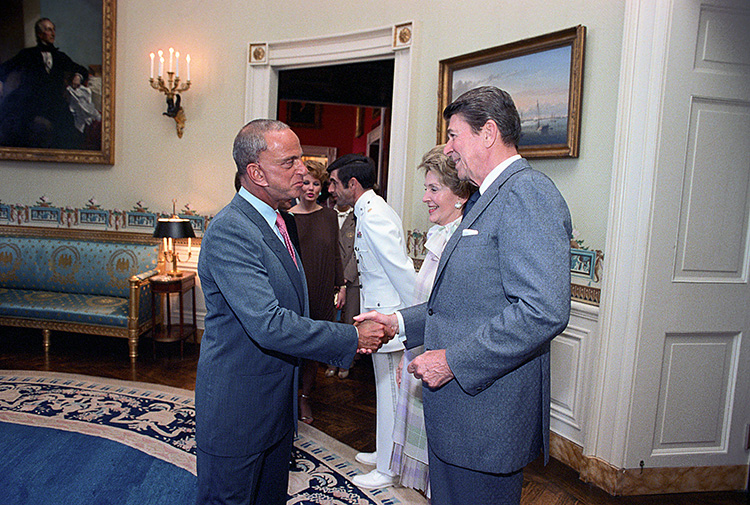
She recalled how she turned to him for help when she wanted to be nominated by then-President Ronald Reagan for a federal judgeship. She believed that help could come from his attorney: Roy Cohn, who had played an infamous role in the 1950s as chief counsel to Sen. Joseph McCarthy (R-Wis.) on the Senate’s Permanent Subcommittee on Investigations. Cohn was “like kissing buddies” with Reagan, she said. “He had Roy Cohn call Reagan about needing to appoint a woman as a federal judge in New Jersey,” Barry told Mary. “Because Reagan’s running for reelection, and he was desperate for the female vote.” Then, she said, “I had the nomination,” and Donald Trump never let Barry forget it.

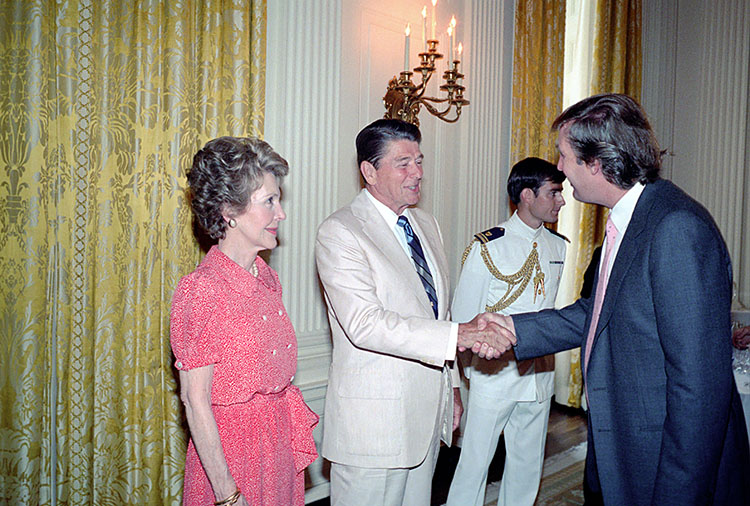
According to a recent documentary film, “Where’s My Roy Cohn?” Cohn had been in regular touch with Reagan. Donald Trump met with Reagan at the White House on Aug. 4, 1983, according to presidential records. Reagan talked with Barry on Sept. 13, 1983, and nominated her the following day, according to Reagan’s daily diary.

“He once tried to take credit for me,” Barry said of her brother, quoting him as saying, “Where would you be without me?”

Barry said she told her brother: “You say that one more time and I will level you.” She told Mary that it was “the only favor I ever asked for in my whole life.” She said that she deserved the nomination “on my own merit” and that she was subsequently elevated to higher judicial posts without her brother’s intervention.

Around the same time the conversations were being conducted, an internal investigation was underway of whether Barry violated judicial conduct rules regarding her role in working with her siblings in determining their tax liability. The investigation stemmed in part from an action that Mary Trump had taken: She had provided boxes of family tax records to the New York Times, which published a Pulitzer Prize-winning report in 2018 that found the president had engaged in suspect tax schemes that increased the family wealth. Barry retired shortly after the investigation was launched, which ended the probe.

Mary Trump said she has not talked to her aunt since the book was published. She said in the Post Live interview that she would not be surprised “if she never contacted me, and I think that’s fair. I understand why she would not want to.”  


August 22, 2020

The Missing Piece in Biden’s Convention Speech


ATLANTIC, RONALD BROWNSTEIN

Last night, Joe Biden capped a Democratic convention like no other by underscoring the themes that dominated the gathering from the beginning: empathy, national unity, racial justice, and President Donald Trump’s failures in managing the coronavirus.

Now the question is whether those messages, which largely eclipsed a direct economic appeal to struggling families, can protect Biden’s consistent lead in national polls against the ideological counterattack from the GOP that’s certain to reach a new peak at next week’s Republican convention.

Biden projected passion, energy, and solidity in remarks that more closely resembled a grave presidential address from the Oval Office than the typical raucous convention speech. In his manner as much as his words, Biden offered a contrast to Trump’s belligerent volatility—and to the GOP’s portrayal of him as in decline both physically and mentally.

Biden projected passion, energy, and solidity in remarks that more closely resembled a grave presidential address from the Oval Office than the typical raucous convention speech. In his manner as much as his words, Biden offered a contrast to Trump’s belligerent volatility—and to the GOP’s portrayal of him as in decline both physically and mentally.

He devoted much more energy to indicting Trump on the outbreak and encouraging national unity than he did questioning the president’s commitment to the middle class or arguing that he himself had better plans to bolster it.

Alex Conant, a GOP public-affairs consultant and former communications director for Marco Rubio, says the Democrats’ choice to downplay discussion of their plans through the week reflected their determination to keep the focus on Trump. At the end of the day, they want this to be a referendum on Trump’s four years in office, not a choice between their vision of the future and Trump’s.”

The risk for Democrats, Conant said, is that this approach leaves more room for Trump to define Biden’s agenda. “If I were Trump, I’d spend all next week and hundreds of millions of dollars in September telling you Biden is going to give you single-payer [health care], higher taxes, and the Green New Deal, which would ruin any chance for the economy to recover,” Conant said. “And force Democrats to have that economic debate.”

Even if Biden emerges from the convention with a boost in the polls, his choice to focus less on economic appeals and more on sweeping themes and social issues, particularly racial justice, raises some of the same questions that surfaced after the Democrats’ last national meeting. Though Hillary Clinton’s 2016 convention drew strong reviews, it too emphasized the party’s embrace of diversity, the breadth of her coalition, and Trump’s deficiencies of character without delivering a clearly delineated economic agenda for working families. Those choices faced pointed second-guessing after Election Day, when Trump’s huge margins among non-college-educated white voters allowed him to dislodge the Rust Belt battlegrounds of Michigan, Pennsylvania, and Wisconsin from the Democrats’ “blue wall” and claim his narrow victory.

Ahead of Biden’s speech last night, the longtime Democratic strategist James Carville, the campaign manager for Bill Clinton’s successful 1992 race, feared that Democrats might be heading down a similar path again this week. He gave high marks to the convention’s personal introduction of Biden and its outreach to young people, but he worried that the event wasn’t following the formula Democrats used to win the House in 2018: Minimize discussion of Trump and emphasize bread-and-butter economic concerns, such as defending the Affordable Care Act and its protections for Americans with preexisting health conditions.

As Elaine Kamarck, a longtime Democratic aide who is now the director of the Center for Effective Public Management at the Brookings Institution, wrote this morning, “Given the choice between policy and character, Democrats focused on character and the contrast between Joe Biden as a person and Donald Trump as a person.”

“Had Donald Trump been a normal Republican president, we would have heard a great deal more about the Republican tax bill, Trump’s single largest domestic accomplishment,” she explained. “But even though it is a huge contributor to the income inequality that most Democrats have railed against for many years, the tax bill was barely mentioned.”

The longest stretch of policy discussion, in an extended sequence on Wednesday, focused on gun control, climate change, citizenship for undocumented immigrants, and women’s rights, not jobs, wages, or retirement. (One caveat: The climate discussion focused on the possibility of creating green jobs.)

One senior Biden adviser, who spoke on the condition of anonymity in order to talk frankly, told me that the issues highlighted during that sequence reflect the priorities of the party’s modern base, as the campaign sees it: young people (guns and climate), suburban women (guns and women’s rights), and people of color (racial justice and immigration).

Yet unless Biden can win across a wide range of Sun Belt states, he’s unlikely to reach 270 Electoral College votes without improving at least somewhat among working-class white voters in the key Rust Belt states of Pennsylvania, Michigan, and Wisconsin. And analysts have long observed that many older Latino and African American voters in particular are more motivated to turn out to the polls by concrete plans to improve their life than by broad promises of confronting discrimination.

Unconventional-Meyerson-081920

Biden certainly has more plans on every conceivable issue than does Trump, who has been almost entirely incapable of explaining what he might do in a second term. And polls over the next few days are likely to show Biden emerging from his convention in a stronger position than any challenger to an incumbent president since Bill Clinton in 1992. With the warm endorsements offered by public figures who span the ideological spectrum, the week also demonstrated Biden’s potential to construct an unusually expansive coalition against Trump—what some have seen as the modern equivalent of the popular front against fascism during the 1930s.

Even most Republicans agree that Trump, by this point, has almost no realistic pathway to winning the popular vote. But even most Democrats agree that he might still squeeze out an Electoral College majority by maximizing margins and turnout among his core group of older, rural, non-college-educated white voters in a few closely balanced states. If he does, Democrats may again rue the choice not to direct a more targeted economic appeal at the voters Trump is relying on most.


Trump’s attempt to bypass Congress on stimulus is offering, at best, only limited economic relief


WASHINGTON POST

Just two weeks after President Trump approved executive actions aimed at bypassing stalled stimulus negotiations with Congress, only one state has said it is paying new jobless benefits, few evictions have been paused, and leading employers have made clear that workers will not benefit from the president’s new payroll tax deferral.

After talks with congressional Democrats faltered, the president on Aug. 8 signed four executive actions aimed at staving off further economic turmoil. They included a $300-per-week benefit for jobless Americans, after the previous enhanced benefits expired in late July. Trump also directed a deferral of payroll taxes, as well as a halt to evictions and a suspension of student loan payments.

But Trump’s directives have so far produced limited economic relief for Americans hurt by the coronavirus pandemic, despite promises by top White House aides that help would come within weeks. By Friday, only Arizona had started sending the extra $300 to its residents.

Trump's Go-It-Alone Stimulus Won't Do Much to Lift the Recovery - The New  York Times

Business leaders say they are unlikely to implement Trump’s payroll tax order

Auto part suppliers, clothing sellers, retailers, restaurants and a torrent of top businesses signaled Tuesday they are unlikely to implement President Trump’s order deferring payment of workers’ payroll taxes, threatening an early blow to a policy the White House has touted as a major form of economic stimulus.

Roughly 30 industry groups, led by the U.S. Chamber of Commerce, described Trump’s executive action as potentially “unworkable,” stressing in a letter to the administration and top congressional leaders that technical and logistical challenges are likely to prevent them from passing any extra income back to their employees as the president intended.

“Therefore, many of our members will likely decline to implement deferral, choosing instead to continue to withhold and remit to the government the payroll taxes required by law,” the groups wrote.

Lawmakers of both parties continue to express an unwillingness to end the payroll tax, given its impact on the budget and federal entitlement programs such as Social Security and Medicare.

Thirteen states have been approved to give the enhanced payments, and some, including Montana and Kentucky, will kick in a $100 match, meaning out-of-work residents there could get up to $400 in enhanced benefits. Many other states either have said they’re applying or have not said whether they will move forward and offer the payments. South Dakota has turned down the jobless benefits.

Trump and his economic team have repeatedly suggested that the executive actions largely render talks with Congress unnecessary, with the president saying that they would “take care of pretty much this entire situation.” National Economic Council Director Larry Kudlow boasted that the orders had led to a dramatic increase in the stock market, while Treasury Secretary Steven Mnuchin said after the orders were signed that the new unemployment payments would arrive “immediately." The next day, Mnuchin said the payments would be arriving “within the next week or two.” Kudlow also said at the time that the benefits would take “about two weeks” to be paid out.

The administration’s assessment of the timing of the benefits has almost certainly proved too optimistic. So far, only Arizona has reported sending the extra $300 week on top of traditional state unemployment benefits, according to Michele Evermore, an unemployment expert at the National Employment Law Project, a nonprofit.

President Trump Signs Executive Orders to Extend Unemployment, Defer Payroll  Taxes | CPA Practice Advisor

Numerous governors have complained that the program is too complicated and could take several more weeks to set up. The White House also stipulated that people receiving less than $100 per week in unemployment benefits from their states are not eligible for the extra $300, effectively preventing as many as 1 million jobless Americans from receiving the benefit. And guidance from the Federal Emergency Management Agency — which manages the disaster relief fund that’s being tapped for the payments — suggested the extra benefit would last only three weeks.

Exacerbating the delays are financial and technical challenges, requiring states to update computer systems that in some cases are decades old. Similar upgrades kept some Americans from receiving their jobless aid for weeks or months earlier in the pandemic, as labor officials struggled to implement the new programs authorized under the $2 trillion Cares Act.

State unemployment officials have said that it would be easier if Congress adopted a new coronavirus aid package rather than piecemeal programs that require constant computer fixes. There appears to be little chance of that happening soon. Many economic experts say the absence of a deal with Congress is sharply limiting the recovery and is hurting unemployed Americans, given the administration’s challenges in implementing the new jobless benefits.

White House officials say they acted rapidly to help the unemployed, without ceding to Democrats’ demand to provide up to $1 trillion in aid to states, cities and tribal governments; Trump officials said that would be a bailout to blue states and localities that mismanaged their budgets. Mnuchin said this week that the White House was not willing to go along with Democrats’ “unreasonable” demands.

But the lack of urgency in reaching a deal on an aid package also reflects the White House’s view that no more federal help is needed to stimulate the economy. Kudlow has repeatedly said that the United States has now entered a “self-sustaining” recovery. Stock markets — one of Trump’s favorite economic indicators — have soared even without an additional federal stimulus package.


August 21, 2020

Biden Promises 'Light' After Trump's 'Darkness': 7 Takeaways From The DNC

 
Win McNamee/Getty Images
 Democrats have to be very happy with what they were able to accomplish this week with their convention.
Their production of the first all-virtual convention went off mostly without a hitch. At times, the last night seemed like whiplash with a serious segment on faith and forgiveness followed by snark from emcee Julia Louis-Dreyfus, for example.
But none of that will be remembered. What will be, and perhaps for a very long time, was the speech Joe Biden was able to deliver. Biden gave a lot of thunderous speeches on the floor of the U.S. Senate when he was a senator and he has appeared at conventions before, but no speech he has ever made was as important, and perhaps as well-delivered, as this one.
With that, here are seven takeaways from a consequential week:
1. Biden may have delivered the best speech of his career
It was more fireside chat than convention barn burner, and he has never been an arena orator like the man he worked for, Barack Obama. But, frankly, it worked for Biden.
He delivered a sober and urgent speech directly to the American people with a clarity of message, one of light versus dark. Biden, a devout Irish Catholic, seemingly channeled years of homilies about good versus evil, right versus wrong. If he wins, it will be a speech for the ages.
"Here and now, I give you my word: If you entrust me with the presidency, I will draw on the best of us, not the worst," he said. "I will be an ally of the light, not the darkness."
The Trump campaign might regret setting the bar so low to the point where as long as Biden got through the speech, he would dispel questions of his mental acuity. But he did far more than that. For the first time, perhaps even since he began this campaign, Biden showed why he should be president for reasons other than simply being not Trump.
2. Democrats offered a different choice
Even before Biden's speech, Democrats were able to lay out a different choice, a different version of what the country could be, for those disaffected by Trump.
Look, Trump's supporters are locked in. But Democrats took aim at that sliver of truly persuadable voters and tried to win them over. Democrats' vision for America is one that celebrates diversity, adheres to norms and will change direction.
Change is one of the most powerful motivators in politics, and it particularly sticks when things aren't going well in the country. Think Ronald Reagan following Jimmy Carter, Bill Clinton after George H.W. Bush and Barack Obama after George W. Bush. If Americans are looking for change again, Democrats presented it.
It's up to Trump and Republicans next week to try to sell steadiness to right the course. That's something that can work for presidents seeking reelection, though it's made tougher by Trump's volatility.

Jill and Joe Biden, wearing face masks, watch fireworks outside the Chase Center in Wilmington, Del., after Biden's acceptance speech for the Democratic presidential nomination.
3. A unified Democratic Party was on display
One advantage of a virtual convention is the boos aren't magnified. Past conventions have featured at least some unrest within the base.
That was certainly true in 2016 with Bernie Sanders supporters who did not go gently into that good night. And it was true of Sen. Ted Cruz supporters at the Republican National Convention the same year.
But it wasn't just the lack of in-person delegates, it was the clear and present threat of Donald Trump for progressives. Sanders spoke strongly on Biden's behalf; and single-payer advocate Ady Barkan, who has ALS, praised Biden and promoted progress over purity.
Sure, there was some grumbling about who got time, who didn't and who got more, but this is a far more unified Democratic Party coming out of this convention than the one taking on Trump the last time.
4. It wasn't all about Trump
For as much as this election is all about Trump and as much as Biden's supporters are mostly motivated by antipathy for Trump, the convention did buoy Biden personally and made an affirmative case for Biden's vision for the country.
It became pretty clear, if it wasn't going in, that a message Democrats wanted to get across was: The Bidens are decent people, people you can trust and who care about people like you.
But as his speech showed, don't mistake kindness for weakness. It's almost as if one message was — he'll fight for kindness.
5. Kamala Harris is the heir apparent

Democratic vice presidential nominee Kamala Harris speaks during the third day of the Democratic National Convention.  Olivier Douliery/AFP via Getty Images
If you had any doubt that Harris was the right pick, she proved she's ready for prime time. She delivered a solid speech and has hit all the right notes since being announced as Biden's running mate.
Being a Black and South Asian woman, she highlights the diversity of the Democratic Party and of America. Her simply being on the ballot is a statement against Trump. But she has shown, throughout her career and highlighted this week, she is far more than that. 
Democrats Question Whether Postmaster General's Hiring Skirted Background ChecksDemocrats Question Whether Postmaster General's Hiring Skirted Background Checks
6. An economic message didn't break through
Biden has led Trump in almost every issue area consistently and by a lot, except when it comes to the economy. Democrats didn't seem to do anything to break through with an economic message, beyond saying that the pandemic had to be solved and other boilerplate Democratic points, like securing the social safety net and having the rich pay their "fair share."
Biden was involved in one segment Thursday dealing with the economy, where he talked with workers. At one point, he said that he believed the auto industry could be revitalized back to its peak in the 1940s and 1950s. But no economist thinks that's possible.
He also said he wants to invest $2 trillion in infrastructure, something every president says he wants to invest in but has been unable to get the parties to agree on how to pay for it.
It sounded as if Harris was on track to pivoting to a new emphasis on the economy when she was picked to be Biden's running mate when she talked about Trump spoiling the economy he inherited from Obama. But that was not something much talked about during these four days.
7. It's about voting, voting, voting

Former first lady Michelle Obama, and her necklace, urged viewers to vote on the opening night of the Democratic National Convention. Chris Delmas /AFP via Getty Images
If there was one message Democrats hope people take away from this week it was that people need to go vote.
While wearing a V-O-T-E necklace, former first lady Michelle Obama implored people get on their "comfortable shoes" and bring their dinners, maybe even breakfasts and wait for as long as it takes.
Her husband, former President Barack Obama, ended his speech with a similar urgency:
"We have to get busy building it up by pouring all our efforts into these 76 days and by voting like never before for Joe and Kamala and candidates up and down the ticket," he said, "so that we leave no doubt about what this country that we love stands for today and for all our days to come."
Democrats really feel if everyone votes, and if all their votes are counted, they win.
And now it's on to the Republican convention starting Monday, where it will be interesting to see whether there are any new ways that Trump frames the argument for why he feels he deserves four more years.


What President Joe Biden would do to stop Covid-19

VOX 
asked some experts last month how Biden’s proposed Covid-19 response differs from what the current federal government has done. They pointed to a few specific provisions in his plans:
  • Establishing a public-private “pandemic testing board” to scale up and allocate testing across the country. (“This would deal with one of the problems we still seem to have, that supply and demand are out of sync,” says Jennifer Kates with the Kaiser Family Foundation.)
  • Creating a state and local government emergency fund that would pay for medical supplies, hiring more health care workers, and providing overtime pay for certain essential workers.
  • Eliminating cost-sharing for Covid-19 testing and treatment — and changing the law so that provision would apply to future public health emergencies.
  • Setting minimum standards for the number of testing sites in each state, including 10 mobile or drive-through sites.
  • Establishing a national public health jobs corps, which would employ at least 100,000 people to do contact tracing.
As NPR reported, right now most states do not have enough people to perform that job. 

“Contact tracing has been mostly ignored at the federal level, and states have been left to prioritize as they see fit,” Joshua Michaud at the Kaiser Family Foundation told me. “Which means that some have done more and others have done much less.”

The on-and-off supply shortages that lead to test results being delayed to the point that they are nearly worthless for contact tracing also reflect the lack of a national coordinated strategy. State and local governments are going to need another injection of stimulus to fend off debilitating staff and service cuts, but the latest stimulus talks have stalled out because Democrats want to put more money in the package but the Trump White House wants less.

Biden is promising much more aggressive federal intervention. As he said in his acceptance speech, concluding his list of Covid-19 policies: "In short, we'll do what we should have done from the very beginning."

August 20, 2020

Bannon Arrested for Fraud

Steven Bannon is arrested and INDICTED over 'multi-million wall fraud'


 Former Donald Trump campaign strategist was arrested Thursday and charged with defrauding hundreds of people as part of a group the promised to use private money to build a section of border wall, a signature issue of the president. Bannon, who helped steer Trump's campaign then joined him in the White House in 2017 as chief strategist only to be forced out, is accused of pocketing $1 million in the alleged scheme. The group promised donors it was a volunteer effort that would direct all funds toward a crash effort to construct wall without government red tape. In reality, say federal prosecutors in New York, the group's founders siphoned off funds for themselves.

Steve  Bannon is arrested with three others in border wall fundraiser fraud: Former Trump adviser faces 40 years in jail for 'ripping off hundreds of thousands of "Build the Wall" donors to finance lavish lifestyle of yachts and private jets'


 Former Donald Trump campaign strategist was arrested Thursday and charged with defrauding hundreds of people as part of a group the promised to use private money to build a section of border wall, a signature issue of the president. Bannon, who helped steer Trump's campaign then joined him in the White House in 2017 as chief strategist only to be forced out, is accused of pocketing $1 million in the alleged scheme. The group promised donors it was a volunteer effort that would direct all funds toward a crash effort to construct wall without government red tape. In reality, say federal prosecutors in New York, the group's founders siphoned off funds for themselves.
 
  • Bannon was taken into custody on a $28 million megayacht by federal agents with the US Postal Inspection Service, an FBI-like unit that investigates mail fraud and other crimes. [Vox / Nicole Narea]
  •  
  • Three other men — Andrew Badolato, Timothy Shea, and Brian Kolfage — were also arrested in connection with the case, a GoFundMe scheme to crowdfund the construction of a wall on the southern border. [NPR / Barbara Sprunt]
  •  
  • The GoFundMe raised $25 million for the effort, but Bannon and his confederates reportedly funneled more than $1 million of that money into their own pockets. [NYT / Alan Feuer and William K. Rashbaum]
  •  
  • The fundraiser first got its start with Kolfage, a veteran and a triple amputee. According to an NBC story from early last year, Kolfage frequently used GoFundMe, among other tools, as a way to harvest email addresses. [NBC News / Brandy Zadrozny and Ben Collins]
  •  
  • Kolfage had pledged that “100 percent” of the money raised would go toward building a wall, but the indictment indicates that he personally spent $350,000 in donor money on a boat and a golf cart, among other things. [Washington Post / Matt Zapotosky
  • Engineers and hydrologists told ProPublica and The Texas Tribune the wall should not have been built so close to the Rio Grande. (Verónica G. Cárdenas for The Texas Tribune/ProPublica)
  •  
  • The group did manage to build a three-mile stretch of wall, according to a report by ProPublica. However, slipshod construction means that the fence is in danger of falling into the Rio Grande River. [ProPublica / Jeremy Schwartz and Perla Trevizo]
  •  
  • On Thursday, Trump disavowed the group and his former adviser, telling reporters that “I don't like that project — I thought it was being done for showboating reasons.” [Politico / Josh Gerstein
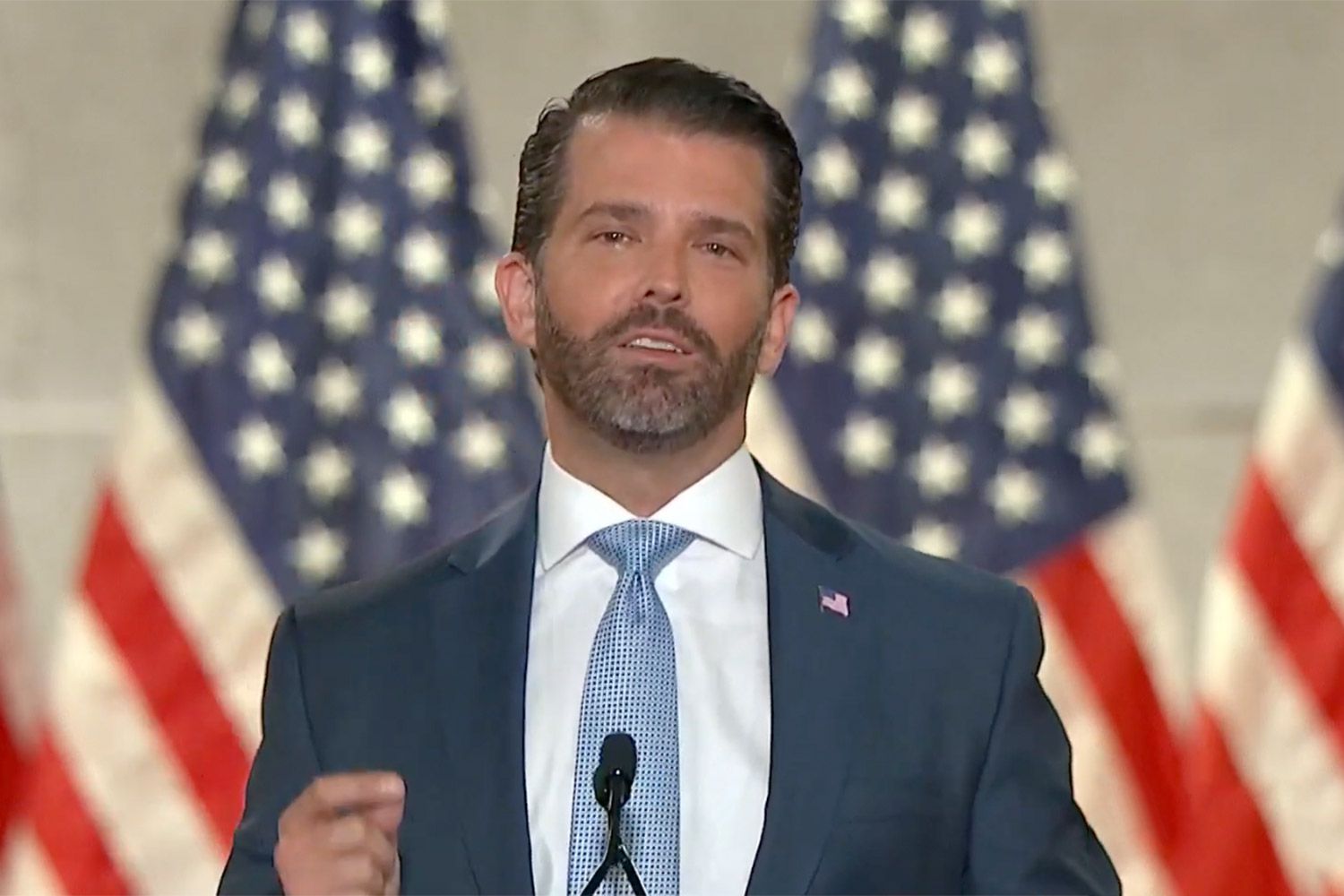
  • Donald Trump Jr.'s Eyes at RNC Speech Become Twitter Fodder | PEOPLE.com
  • But Donald Trump Jr. endorsed the project in 2018, and there’s quite a bit of overlap between Trumpworld and the We Build the Wall group — not only was Bannon involved, but so was Trump-endorsed 2018 Kansas gubernatorial candidate Kris Kobach, among others. [Twitter / Andrew Kaczynsk
  • Bramhall's World: Bannon


Students, and Covid-19, are returning to campus

 Bramhall's World:

VOX

  • Around the US, college students are beginning to return to campus for the fall semester — and early signs suggest it’s not going well. Coronavirus cases appear to be climbing quickly, and some universities have already backtracked on reopening plans. [NYT / Amelia Nierenberg and Adam Pasick]
  • As of Wednesday, the University of Notre Dame had at least 222 coronavirus cases on campus, just two weeks after the fall semester began. For context, that’s more than twice as many active cases as all of New Zealand. [Twitter / Rodger Sherman]
  • The Bear Trap’s rooftop bar on the Strip, part of the University of Alabama’s bar scene, in Tuscaloosa, Ala.
  • It’s also more than three times the WHO-recommended test positivity rate for states — much less universities — to reopen. Notre Dame now plans to hold at least the next two weeks of classes online. [CBS News / Sophie Lewis]
  • The University of North Carolina’s flagship Chapel Hill campus also abandoned its in-person reopening plan on Monday, announcing the switch to online-only learning after a surge in new cases. [CNBC / Will Feuer]
  • Despite the pandemic risk, universities have a strong incentive to see students return to campus — the switch to online-only classes this fall is poised to do real damage to university budgets. [CNN / Leah Asmelash]
  • Students wear masks on campus at the University of North Carolina in Chapel Hill, N.C., Tuesday, Aug. 18, 2020. The university announced that it would cancel all in-person undergraduate learning starting on Wednesday following a cluster of COVID-19 cases on campus. (AP Photo/Gerry Broome)
  • They might not have much choice, though. Michigan State conceded on Tuesday that “despite our best efforts and strong planning, it is unlikely we can prevent widespread transmission of COVID-19” on campus, and more schools could reach the same conclusion before long. [US News / Lauren Camera]


"I KNOW WHAT A PREDATOR LOOKS LIKE"

 Democratic vice presidential nominee Senator Kamala Harris speaks from behind a podium on the third night of the Democratic National Convention in Wilmington, Delaware.

 4 takeaways from the third night of the Democratic National Convention

WASHINGTON POST

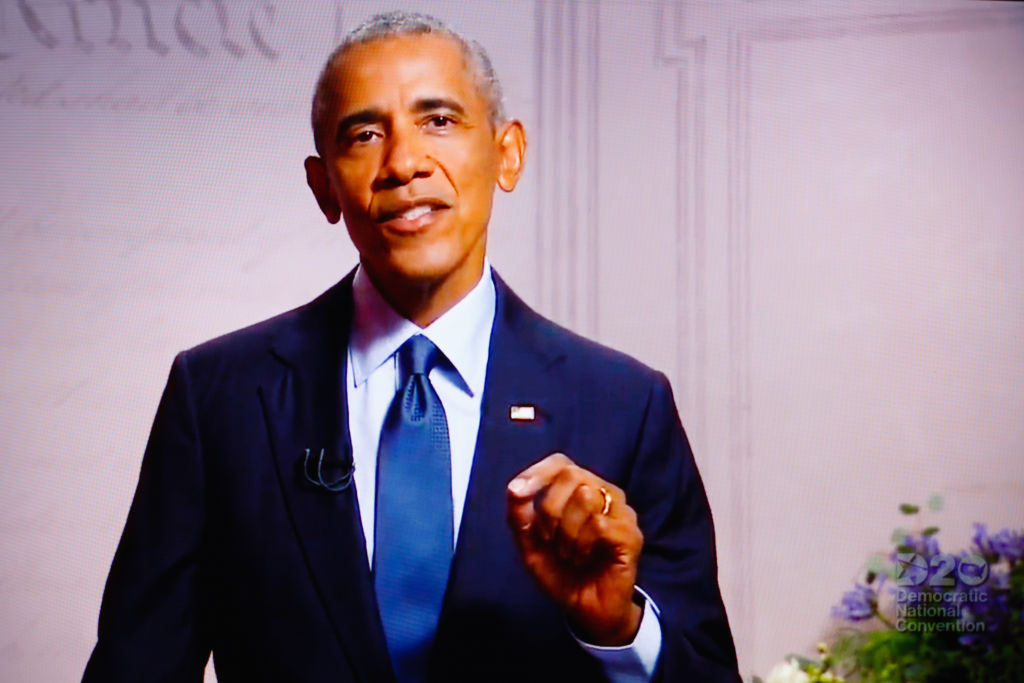
Democrats on Wednesday night formally nominated Sen. Kamala D. Harris (D-Calif.) as Joe Biden’s vice-presidential nominee, making her the first woman of color on a major-party ticket, while the last Democratic president, Barack Obama, issued an extraordinary rebuke of his successor, President Trump.

Wednesday night’s acceptance speech was an opportunity for Harris to redefine herself — after her 2020 primary campaign flamed out early and at a time in which she’s not just vital to Democrats’ 2020 hopes, but is set up to be their standard-bearer in future presidential elections.

Two lines stood out: “I know a predator when I see one,” and “There is no vaccine for racism.”

“I have fought for children and survivors of sexual assault,” Harris said. “I fought against transnational criminal organizations. I took on the biggest banks and helped take down one of the biggest for-profit colleges. I know a predator when I see one.”

That line, which is similar to one she used when campaigning for herself, came before Harris’s address explicitly turned to President Trump, but it was clearly intended to paint a picture. It was a subtly delivered but not terribly subtle allusion to the character of the man who occupies the Oval Office. In fact, Harris has previously followed up similar comments by directly invoking Trump, saying, “And we have a predator in the White House right now.” Harris also uttered it while talking about her past as a prosecutor — seeking to turn something of a liability with progressives into a positive.

Harris later described racial injustice as a “virus,” likening it to the coronavirus pandemic.

“This virus, it has no eyes, and yet it knows exactly how we see each other and how we treat each other,” Harris said. “And let’s be clear: There is no vaccine for racism.”

The speech was short on direct attacks on Trump — the traditional role of a running mate. But it seemed to pave a path for doing so next.

Obama's Brawl With Trump Breaks With History in a Big Way | Time

2. Obama’s big break with history

For years, Trump built his political career by using Obama as a boogeyman — mostly as the lead public face of the racist birther movement. Despite this, Obama in 2016 initially offered Trump the kind of well wishes we expect during a peaceful transfer of power. He even called their post-election conversation “excellent” and professed to be “encouraged” by it.

On Wednesday night, Obama was done putting anything amounting to a good face on things, utterly departing from traditional post-presidential protocol. While Obama has increasingly criticized Trump, on Wednesday he went further.

In his speech, Obama said that the man he hoped would rise to the task had utterly failed — and didn’t really even try.

“He never did,” Obama said. “For close to four years now, he’s shown no interest in putting in the work, no interest in finding common ground, no interest in using the awesome power of his office to help anyone but himself and his friends, no interest in treating the presidency as anything but one more reality show that he can use to get the attention he craves.

“Donald Trump hasn’t grown into the job because he can’t. And the consequences of that failure are severe: 170,000 Americans dead. Millions of jobs gone while those at the top take in more than ever.”

The comments echoed former first lady Michelle Obama’s speech Monday night, when she said Trump “cannot meet this moment. He simply cannot be who we need him to be for us.”

Barack Obama also suggested that Trump used law enforcement as political pawns and averted “facts and science and logic” in favor of “just making stuff up.”

“None of this should be controversial,” Obama said, before alluding to his 2004 convention speech: “These shouldn’t be Republican principles or Democratic principles. They’re American principles. But at this moment, this president and those who enable him have shown they don’t believe in these things.”

Obama added: “This administration has shown it will tear our democracy down if that’s what it takes for them to win.”

The former president spent most of his speech on the kind of high-minded rhetoric that characterized his 2004 speech and on vouching for his former vice president. But his decision to go so hard on Trump was surely one he arrived at after years of Trump laying waste to so many of the other norms of American politics. Democrats have trodden uneasily around just how much to go down that path themselves, and that made this a significant moment.

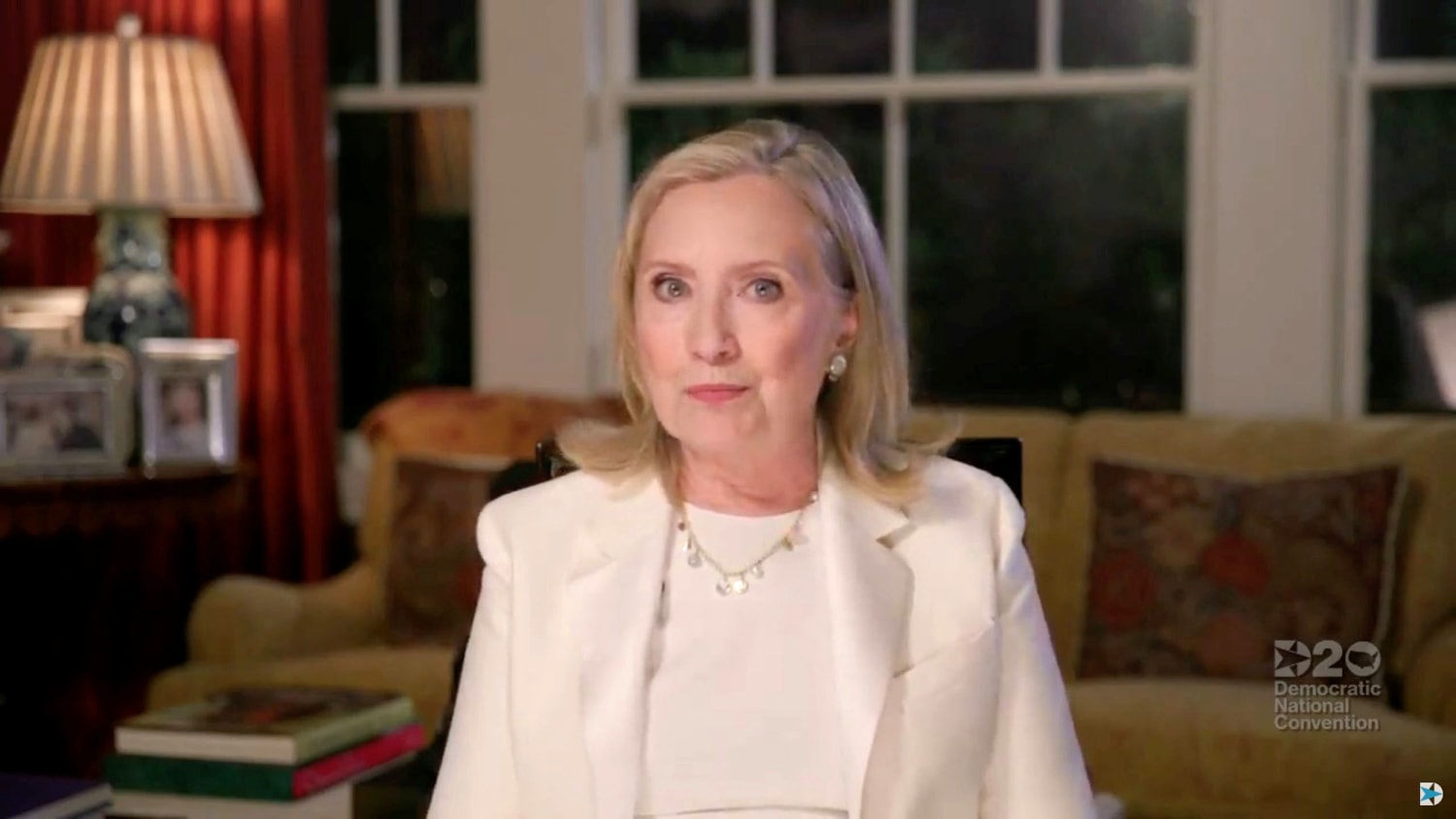
Hillary Clinton says Biden should not concede the election 'under any  circumstances'

3. Hillary Clinton turns her disappointment into a call to action

Ever since unexpectedly losing the 2016 election, Hillary Clinton has blamed various factors — many of them credibly, given the narrowness of her loss — often re-litigating things even as some Democrats wanted to turn the page.

But on Wednesday night, she found a way to turn her disappointment into a perhaps more fruitful call to action. Reflecting on her own loss, Clinton implored Democrats not to be overconfident or take things for granted.

“For four years, people have told me, ‘I didn’t realize how dangerous he was,’ ‘I wish I could do it all over’ or worse: ‘I should have voted,’” Clinton said. “Look, this can’t be another woulda, coulda, shoulda election.”

She added later: “And don’t forget, Joe and Kamala can win by 3 million votes and still lose — take it from me. So we need numbers overwhelming, so Trump can’t sneak or steal his way to victory.”

That last line could be read as an allusion to Russian interference and other factors that Clinton has suggested made Trump’s win illegitimate. It could also be read as an allusion to Trump’s 2020 maneuvers with the post office. But the practical impact is probably the same.

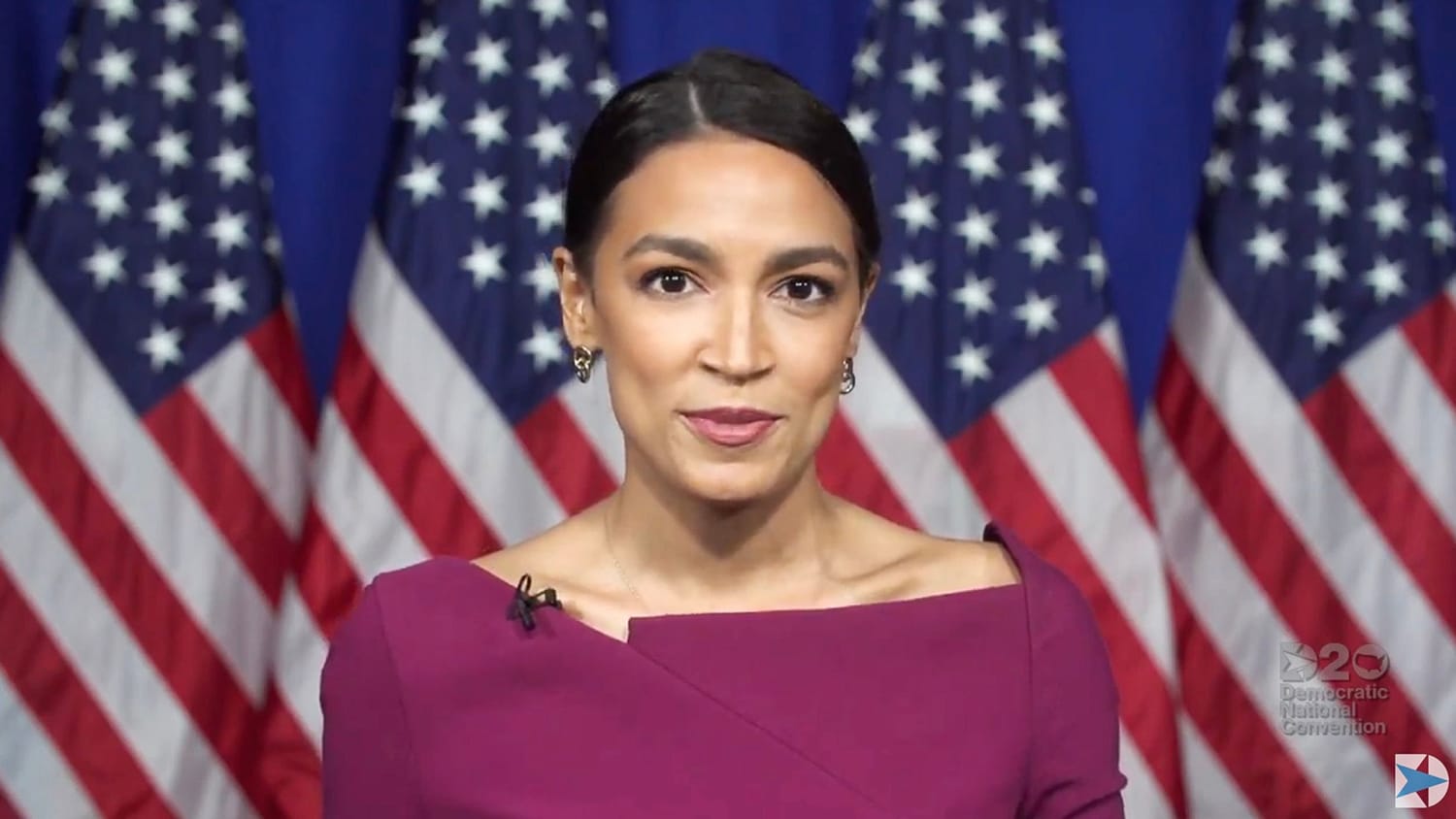
AOC symbolically nominates Bernie Sanders in 60-second DNC speech

4. Sidelining the left-wing insurgency

Around the time the convention began Monday, a quarrel broke out between Rep. Alexandria Ocasio-Cortez (D-N.Y.) and former Ohio governor John Kasich (R). Kasich, who would speak that night, had suggested that Ocasio-Cortez’s role in the modern Democratic Party was overstated, and she hit back hard. For a party that has largely tamped down tensions between its left wing and the establishment since Biden emerged as its nominee, it threatened to be an unhappy sideshow.

Since then, though, it’s been “kumbaya.”

For the third night in a row, a leader of the liberal movement in the United States spoke at the convention — Bernie Sanders on Monday, Ocasio-Cortez on Tuesday and Elizabeth Warren on Wednesday. But there has been almost no real dissension expressed. Sanders even offered an enthusiastic endorsement of Biden’s health-care plan, which he had attacked in the 2020 primaries.

Criticism of Biden — or even a hint of it — was never going to happen in such a prepackaged virtual convention. But that doesn’t mean there wouldn’t be avenues for dissension about the future of the party — as Monday showed. Thus far, there’s almost no indication of that. Apart from grumbling about the likes of Kasich and Colin Powell speaking, it’s the picture of a party united behind a common cause — at least for now.