October 12, 2020

Court-Packing

 Joe Biden was campaigning in Toledo, Ohio on Monday when he made the slip

The talking point on the Sunday talk shows, pushed hard by Republicans and enabled by the media, was that Democratic presidential nominee Joe Biden needs to explain his stance on “court-packing,” that is, adding more justices to the Supreme Court. Some Democrats have begun to talk about that outcome if the Republicans ram through Amy Coney Barrett in these last few days before the election.

This is bizarre first of all because the Republican Party did not even bother to write a platform this year to explain any policies at all for another Trump term, and Trump has been unable to articulate any plans for the future, while the idea of “court-packing” is a future hypothetical, dependent on what today’s Republican Senate does.

It’s bizarre because Trump is egging on his followers to violence—just today he urged supporters to “FIGHT FOR PRESIDENT TRUMP.” He is so misrepresenting the reality of the coronavirus pandemic that today Twitter tagged one of his tweets as a violation of Twitter rules and Dr. Anthony Fauci publicly objected to the Trump campaign’s misrepresentation of his statements about Trump’s handling of the pandemic. The campaign quoted Fauci out of context and without his permission, but campaign spokesperson Tim Murtaugh dismissed Fauci’s complaint, saying that they were indeed Fauci’s words, and Trump agreed. The New York Times has also continued its coverage of Trump’s taxes, showing him to be deep in what amounts to a pay-to-play scandal, in which he has essentially turned the U.S. government over to the highest bidder, revealing himself to be the most corrupt president in U.S. history.

And yet, today the chair of the Republican National Committee, Ronna McDaniel, told Margaret Brennan on CBS’s “Face The Nation” that she would not talk about Trump’s financial scandals because “You have a Democrat running on the biggest power grab – the absolute biggest power grab in the history of our country and reshaping the United States of America and not answering the question. That’s all we should be talking about.” The media seems to be taking this distracting bait.

What makes this so especially bizarre is that it is Republicans, not Democrats, who have made the courts the centerpiece of their agenda and have packed them with judges who adhere to an extremist ideology. Since the Nixon administration began in 1969, Democrats have appointed just 4 Supreme Court justices, while Republicans have appointed 15.

The drive to push the court to the right has led Republicans under Senate Majority Leader Mitch McConnell to take the unprecedented step of refusing to hold a hearing for Barack Obama’s nominee for the Supreme Court, the moderate Merrick Garland, on the grounds that it was wrong to appoint a Supreme Court justice during an election year. There have been 14 justices confirmed during election years in the past, but none has ever been confirmed after July before an election.

Obama nominated Garland in March 2016, but now, in October, McConnell is ramming through Trump’s nominee Amy Coney Barrett.

Americans are worried that the increasingly conservative cast to the court does not represent the country. Four, and now possibly five, of the current justices were appointed by presidents who lost the popular vote, and have been confirmed by senators who represent a minority of the American people: Justice Brett Kavanaugh’s Senate support represented just 44% of the country.

So there is talk of increasing the size of the Supreme Court. This is legal. The Constitution does not specify the size of the court, and it has changed throughout our history. But the current number of justices—9— has been around for a long time. It was established in 1869. 

-----

Since Nixon, Republicans have made control of the nation’s courts central to their agenda. But while most voters tend to get distracted by the hot-button issues of abortion or gay rights, what Republican Supreme Courts have done is to consolidate the power of corporations.

Lewis F. Powell, Jr., United States Supreme Court Associate Justice. News  Photo - Getty Images

In 1971, a corporate lawyer for the tobacco industry, Lewis Powell,[above] wrote a confidential memo for the U.S. Chamber of Commerce warning that corporate America needed to work harder to defend what he called “free enterprise.” Angry that activists like Ralph Nader had forced safety regulations onto automobile manufacturers and the tobacco industry, he believed that businessmen were losing their right to run their businesses however they wished. Any attack on “the enterprise system,” he wrote, was “a threat to individual freedom.”

Powell believed that business interests needed to advance their principles “aggressively” in universities, the media, religion, politics… and the courts. “The judiciary,” he wrote, “may be the most important instrument for social, economic and political change.” He wrote that “left” institutions like the American Civil Liberties Union (ACLU), labor unions, and civil rights activists were winning cases that hurt business. “It is time for American business—which has demonstrated the greatest capacity in all history to produce and to influence consumer decisions—to apply its great talents vigorously to the preservation of the system itself.”

The following year, Nixon appointed Powell to the Supreme Court. During his tenure in office, Nixon would appoint three more justices. Nixon’s successor, Gerald Ford, would appoint another.

Democratic President Jimmy Carter, who followed Ford, appointed none.

Under President Ronald Reagan, cementing the interests of business in the Supreme Court would become paramount. Reagan’s Attorney General, Edwin Meese, deliberately politicized the Department of Justice in an attempt, as he said, to “institutionalize the Reagan revolution so it can’t be set aside no matter what happens in future elections.” Reagan made 4 appointments to the Supreme Court.

During Reagan’s term, lawyers eager to push back on the judicial decisions of the post-WWII Supreme Court that had expanded civil rights and the rights of workers began to organize. They wanted to replace the current judges with ones who believed in “originalism” and who would thus cut regulations and expanded civil rights.
About Us | The Federalist Society

In 1982, law students at Yale, Harvard, and the University of Chicago organized the Federalist Society for Law and Public Policy Studies to advance a legal ideology that opposed what they believed was “judicial activism.” Judges who expanded rights through their interpretation of the laws were “legislating from the bench,” they believed, intruding on the rights of the legislative branch of the government.

By the time of President George W. Bush, the Federalist Society was enormously influential. Members of the society made up about half of his judicial appointments. The society also urged Bush to stop letting the American Bar Association rate judicial nominees, believing the ABA was too “liberal” and therefore rated conservative judges more harshly than others.

During the Obama administration, justices who were associated with the Federalist Society were deciding votes for the 2010 Citizens United decision permitting businesses unlimited contributions to political campaigns and the 2013 Shelby v. Holder decision gutting the 1965 Voting Rights Act.

Under Trump, its power has grown even greater. Five of the 8 current members of the Supreme Court—Samuel Alito, John Roberts, Clarence Thomas, Neil Gorsuch, Brett Kavanaugh—and now Supreme Court nominee Amy Barrett, are members of the Federalist Society.

While Republicans desperately want to make the Barrett nomination about her religion, the reality is that the members of the Supreme Court who are wedded to an originalist interpretation of the document threaten far more than reproductive rights. Among other things, the court is taking up the Affordable Care Act just a week after the election.

Notes:

https://www.npr.org/2020/10/11/922806310/biden-campaign-continues-to-deflect-on-court-packing

https://en.wikipedia.org/wiki/List_of_presidents_of_the_United_States_by_judicial_appointments

Powell memo: https://d1uu3oy1fdfoio.cloudfront.net/wp-content/uploads/2012/09/Lewis-Powell-Memo.pdf

https://billmoyers.com/content/the-powell-memo-a-call-to-arms-for-corporations/

https://www.theatlantic.com/politics/archive/2018/10/senators-kavanaugh-represented-44-percent-us/572623/

https://www.npr.org/2016/11/03/500560120/senate-republicans-could-block-potential-clinton-supreme-court-nominees

https://www.nytimes.com/interactive/2020/10/10/us/trump-properties-swamp.html

https://www.cnbc.com/2020/09/26/koch-network-campaign-for-support-trump-supreme-court-nominee.html

https://www.cnn.com/2020/10/11/politics/fauci-trump-campaign-ad-out-of-context/index.html

Trump promised to bring China to heel. He didn’t. The result is a pitched conflict.

“Trump’s bet that he could tame China’s rise through a mix of personal charisma and dealmaking prowess has faltered in the fourth year of his presidency,” David Nakamura reports. “Trump and Chinese President Xi Jinping … have not spoken since March. Tensions over the coronavirus pandemic have exposed Trump’s claims of friendship with Xi … Trump was on the precipice of declaring victory with his China strategy as recently as January, when he hosted senior Communist Party officials in a White House celebration of a modest trade pact. But the president has since shifted to attacking Beijing as an even greater danger than he suggested in 2016 … Yet Trump’s renewed tough talk has served as a tacit acknowledgment that his vow to bring China to heel has failed, even as he seeks to convince voters that [Biden] is not strong enough to stand up to Xi. … Trump has moved the U.S.-China relationship from one of skeptical cooperation to one of distrust and antagonism, leaving the world’s two major powers at odds on a range of economic and national security issues that are resonating around the globe." 

  • North Korea’s massive, new intercontinental ballistic missile was paraded through the streets of Pyongyang over the weekend, a chilling reminder the regime poses a greater threat to the United States now than when Trump took office. Kim Jong Un has the capacity to strike our homeland. (Simon Denyer)

Police Arrest Heshy Tischler As His Backers Swarm Home Of The Jewish Journalist He Targeted
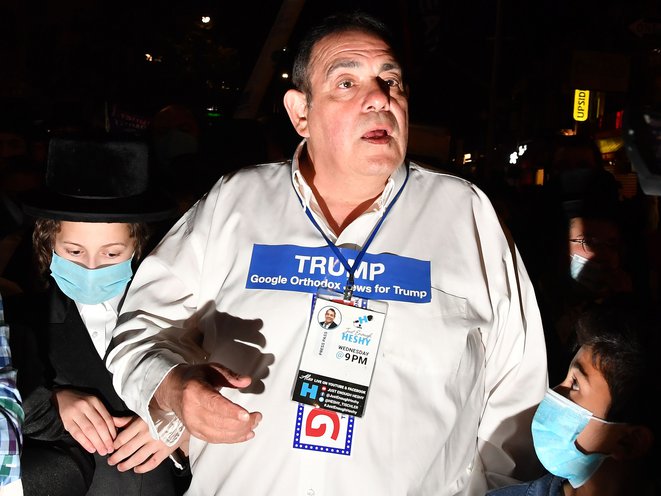
Heshy Tischler at a protest he organized on October 7th
Heshy Tischler at a protest he organized on October 7th STEPHEN LOVEKIN/SHUTTERSTOCK

Four days after leading a violent mob against a journalist in clear view of NYPD officers, Heshy Tischler, the right-wing radio host and City Council candidate, was arrested by police outside his Borough Park home on Sunday night.

Tischler was charged with unlawful imprisonment and inciting a riot in connection with the assault of Hasidic journalist Jacob Kornbluh on October 7th, police said. Shortly after his arrest, Tischler's ultra-Orthodox supporters gathered outside Kornbluh's home, waving Trump flags and threatening him until the early hours of Monday morning.

Tischler, an outspoken Trump supporter and coronavirus denialist, has commanded the community's bubbling rage over Governor Andrew Cuomo's renewed lockdown measures, leading a string of protests that have erupted in violence against bystanders and journalists.

Within minutes of his arrest on Sunday, a post from Tischler's Twitter account revealed Kornbluh's address. Video shows hundreds of people gathered in the street and attempting to storm the building. A friend of Kornbluh's said the group stayed until 2 a.m.

Kornbluh, a veteran journalist with Jewish Insider, has drawn the ire of some in the community for his reporting on attempts to skirt social distancing restrictions during the pandemic.

On Wednesday night, Tischler urged a crowd to surround Kornbluh while chanting "moser" — a term for a Jewish informant, deserving of the death penalty, according to some religious texts. The mob repeatedly lunged at the reporter, pinning him against a wall, while kicking and spitting at him.

"Yeah he got beat up," one of the men involved in the beating told Gothamist afterward. "He's lucky to be alive."

On Friday, Tischler claimed he'd reached an agreement with NYPD to turn himself into police on Monday, after the Jewish holiday of Simchat Torah.

According to Reverend Kevin McCall, a Black civil rights leader, Tischler had arranged with Chief of Detectives Rodney Harrison and Brooklyn District Attorney Eric Gonzalez to surrender alongside McCall. Authorities changed their mind, McCall said, after Tischler claimed in a video that he was reconsidering the offer.

"You're arresting me when we made a deal," Tischler can be seen shouting on Sunday night, as police dragged him away in handcuffs. "We made a deal that I was going to be arrested tomorrow."

"This is serious crime," Rev. McCall told Gothamist. "If it was in a Black community, he would've been arrested immediately. Even after the mayor and governor called for his arrest, for him not to be in police custody says something about the New York City police department. Are they afraid of Heshy?"

LA Lakers Win their 17th NBA championship


The Western Conference champions beat the Miami Heat 106-93 in Game 6 of the NBA Finals in Orlando, Florida, on Sunday, securing their first championship win since 2010. 

The Lakers clinched the title after a down-to-the-wire battle at Friday’s Game 5, when the Heat staved off elimination in a last-minute win. It comes after a tumultuous 74th NBA season that started almost a year ago. The league was brought to a standstill by the COVID-19 pandemic in March, but restarted in late July in an isolated bubble at Orlando’s Walt Disney World.


LeBron James won his 4th Finals MVP award, making him the first player in NBA history to do so with three different teams.

This season, for James and the Lakers, had it all. And it ended in the only fashion that they deemed would be acceptable, with them back atop the basketball world.

It’s the Lakers first time as NBA champions since Kobe Bryant’s fifth and final title a decade ago. James had 28 points, 14 rebounds and 10 assists.


Anthony Davis had 19 points and 15 rebounds for the Lakers, who dealt with the enormous anguish that followed the death of the iconic Bryant in January and all the challenges that came with leaving home for three months to play at Walt Disney World.

With that, the league’s bubble chapter, put together after a 4 1/2-month suspension of play that started March 11 because of the coronavirus pandemic, is over. So, too, is a season that saw the league and China get into political sparring, the death on Jan. 1 of commissioner emeritus David Stern — the man who did so much to make the league what it is — and then the shock on Jan. 26 that came with the news that Bryant, his daughter Gianna and seven others died in a helicopter crash.

The Lakers said they were playing the rest of the season in his memory.

This article originally appeared on HuffPost and has been updated.

October 11, 2020

Key takeaways from the New York Times' investigation into Trump's taxes while in office


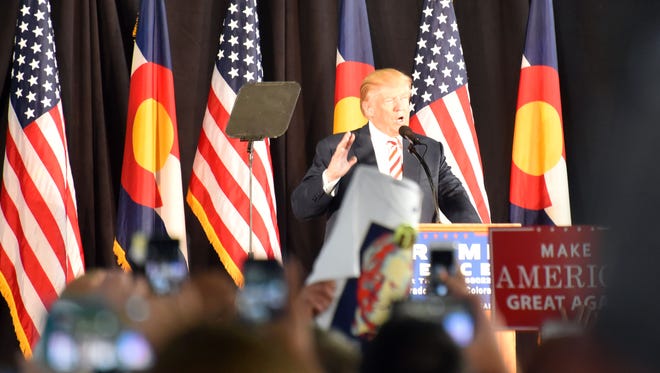
Donald Trump held a rally in Colorado Springs, Colo., on Oct. 18, 2016, saying: “Either we win this election or we lose this country."

 During his 2016 campaign and throughout his time in office, President Donald Trump has repeatedly made promises to "drain the swamp." The phrase signaled to many a desire to change Washington's widely maligned political culture.

In office, however, Trump has reportedly done just the opposite, according to a recent New York Times investigation into the federal taxes across the Trump organization.

Here are some of the most notable revelations from the investigation, which found over 200 companies, lobbying groups and foreign governments did business with, and benefitted from, work with Trump's businesses. 

Judd Deere, a White House spokesman, told the Times in response to their reporting that Trump remained out of the loop on the Trump Organization's daily operations. Eric and Don. Jr remained in charge of the family business, he said.

"The president has kept his promise every day to the American people to fight for them, drain the swamp and always put America first," Deere said.

New York Times investigation: President Donald Trump's tax returns

Trump did not back away from family operation

After his victory in the 2016 election, Trump vowed to back away from the day-to-day activities of the Trump Organization, leaving the family operation in the hands of his sons, Eric Trump and Donald Trump Jr. 

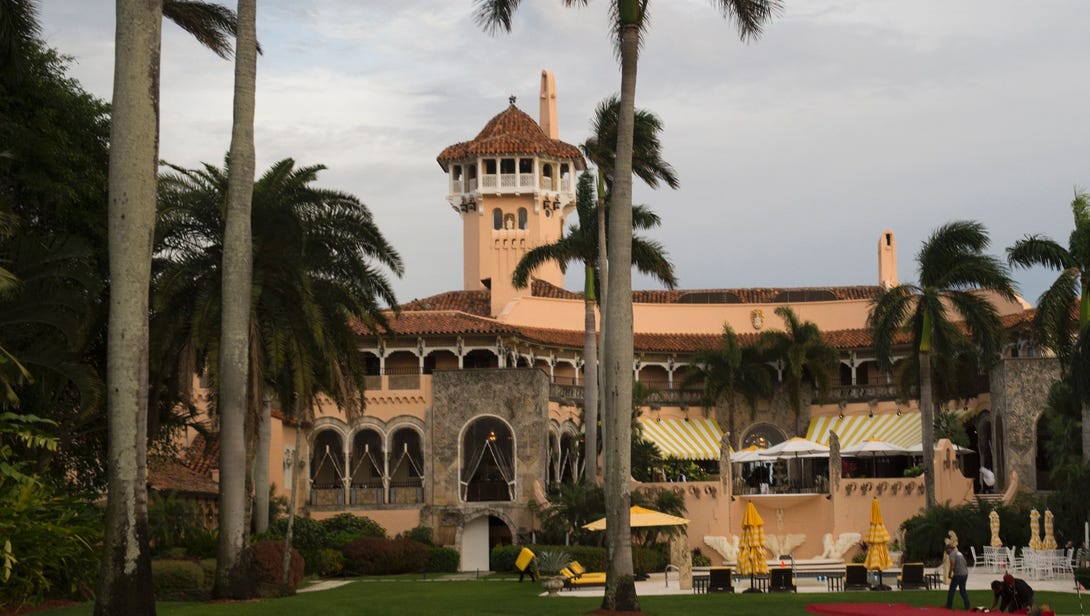
The Times found, however, that Trump would occasionally let managers at the Trump International Hotel in Washington know he was being briefed on their performances. At Mar-a-Lago, the president reportedly raised prices on new members aiming to join the club at least twice during his first term.

Trump also would sometimes survey the details of club memberships and operations while serving as president. Eric Trump was known to brief his father on the Trump Organization, according to a former administration official cited by the Times.

Trump family businesses earned millions before he took office

Interviews conducted by the Times with almost 250 business leaders, lobbyists and Trump administration officials detailed how Trump interacted with monied interests before and during his presidency. 

The Times said almost a quarter of the patrons in its report had not been previously reported on by other outlets.

Sixty customers with business interests with Trump before he took office brought nearly $12 million to the Trump Organization during the first two years of Trump’s presidency, according to the Times.

While many of those interviews said that Trump's advancing of their interests was not tied to their business with the Trump organization, almost all saw some kind of benefit from the federal government after Trump took office. 

The tax records found that the club’s initiation fees in 2016 gave about $6 million in revenue for the organization. 

Mar-a-Lago operates as a major lobbying site 

The Times report also found that many of Trump's associates who helped lobby for his resorts had been elevated to political primacy in Washington as well.


These customers ranged from political leaders in the Dominican Republic Nigeria and Ukraine to large private prison and agricultural firms. Each of the foreign officials and domestic firms who conducted business with Ballard's firm saw notable material benefits from the administration.

Much of this lobbying was conducted at and through connections made at the Trump Organization's Doral and Mar-a-Lago resorts in Florida. 


Access to Trump through Mar-a-Lago was common

Trump has spent much of his time in office at one of his organization's properties. The Times investigation found that his frequent stays at Mar-a-Lago made him and senior officials easily accessible to the resort's members, many of whom had joined with the explicit goal of lobbying the president.

Trump has spent nearly 400 days of his presidency at one of the family's hotels and properties during his presidency, making for many opportunities for such lobbying at Mar-a-Lago and elsewhere.

Experts on Trump's taxes: 5 key takeaways from experts on the president's taxes

Customers framed their patronage in religious terms

Evangelical elites and other prominent social conservatives are among the president's most fervent supporters and frequent customers. The organization's Washington hotel has emerged as a major center of religious gatherings, fund-raisers and tours for conservative Christian groups during Trump's presidency.

Many religious conservatives explicitly linked their support of the president's businesses and administration to the president's socially conservative agenda. Some cited Trump's stances on conservative judges, abortion and Israel during interviews conducted with the Times to explain their support.

High-profile evangelical ministers were also given VIP status at Trump resorts, according to former employees who spoke with the Times. 

Social media chronicles Trump engagement with lobbyists

Hundreds of social media posts reviewed by the Times also found that many of those seeking favor with the president felt no need to hide their intentions. Many members and visitors of Trump properties frequently bragged about their access to the president.

“Once he became president, everyone wanted to be around him,” Jeff Greene, a Florida real estate developer and Mar-a-Lago member, told the Times. "People like to be where presidents are.”

The Times also found that over 20 officials, politicians and organizations from foreign groups had visited with the president and senior aides at Trump properties, often using the opportunities to gain political favor at home or lobby on behalf of their countries.

Many of these foreign politicians, many of whom were in not in government in their home countries, would treat the informal interactions as official state visits or otherwise capitalize on engagement an appearance would given them on social media.

Experts on the implications

After the first installment of the New York Times investigation, USA TODAY spoke with multiple experts about the findings of the report, including their legality and implications for the president’s electoral chances. Overall, the president’s behavior and that of his businesses are likely legal, but highly problematic nonetheless.

"These tax returns are aggressive. The devil is in the details, but we don’t have all the details," said Francine Lipman, a tax expert and professor with the University of Nevada-Las Vegas School of Law. "That doesn’t mean it’s tax fraud. But Trump is taking some very aggressive positions."

Here the takeaways from what the experts said: 

Massive deductions aren't unusual in Real Estate

Dan Geltrude, a CPA, tax expert and founder of accounting firm Geltrude & Company LLC in Nutley, New Jersey, says it to see people in investment real estate take large tax deductions for depreciation.

"There are ways to pay little in taxes. That’s not Trump’s fault. Blame the IRS tax code for that," says Geltrude. "It’s reasonable that he would want to limit what he pays in taxes just like everyone else would." 

Audit questions

Trump’s ongoing tax audit dispute with the Internal Revenue Service poses many questions.

"He's a sitting president who gets to choose the IRS commissioner and the Treasury secretary and potentially owes $100 million. It reeks of conflict of interest,” Lipman said.

Net worth remains a mystery 

Joshua Jenson, the managing partner of a CPA firm Jenson & Company, said even with the report it is still difficult to determine Trump’s overall net worth. As with the most recent revelations, however, they do show how Trump earns money and what he owns.

"It’s difficult to determine someone’s net worth from tax returns," says Jenson. "But if you have the business tax returns, you can see the assets and liabilities, which in essence shows the net worth of that business. But only on the book basis, not fair market value.

Questionable deductions

Overall, Trump’s lack of paid taxes is an extreme example of what is possible under the U.S. tax code.

"If you find ways of deducting every act in society that you do, then you've basically eliminated an income tax for yourself," Phil Hackney, a law professor at the University of Pittsburgh, told USA TODAY. "That creates real problems because employees can't do that. He's found ways to deduct things that everyone else pays taxes on."

This article originally appeared on USA TODAY: Key takeaways from NYT look into Trump's taxes while in office

Trump hosts first public event from White House Balcony since COVID-19 diagnosis,


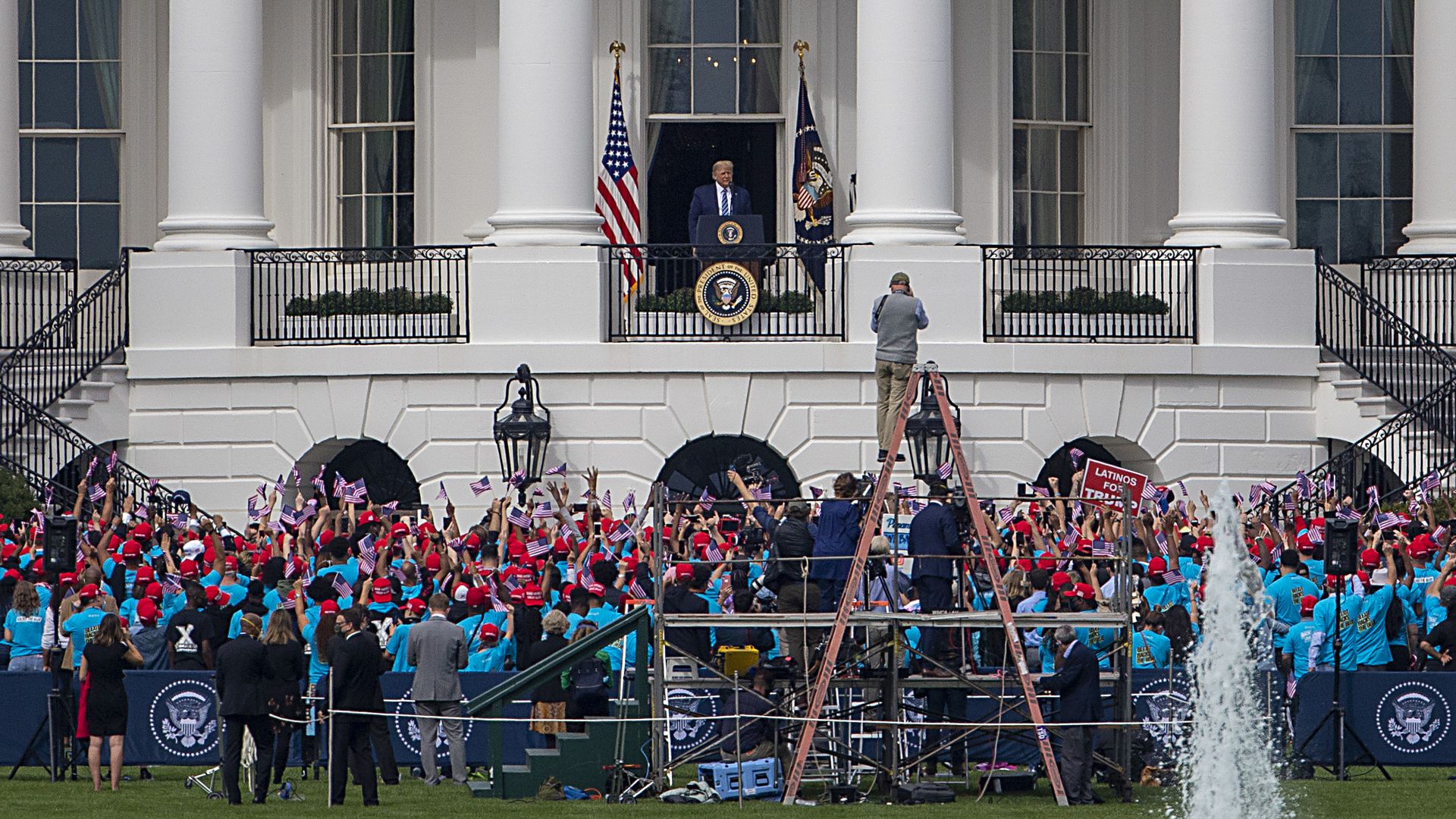
In photos: Trump's first White House rally since contracting coronavirus


President Trump on Saturday hosted somewhere between 300 and 400 people on the South Lawn of the White House, marking his first public event since he was hospitalized after contracting COVID-19 last week. It's been just two weeks since a crowd gathered in the Rose Garden for Judge Amy Coney Barrett's Supreme Court nomination, which experts believe may have been the catalyst for a coronavirus outbreak that affected both the Trump administration and Republican senators.

Trump was scheduled to speak Saturday for about 30 minutes, but wound up only utilizing 18, an unusual instance of efficiency for the president, who is known for going on tangents that drift far beyond the scope of his planned marks. His voice reportedly sounded "a touch hoarse," but he showed no outward signs of illness and said he was "feeling great," The Associated Press reports.

During his speech, Trump said the coronavirus "is going to disappear" largely thanks to "science, medicine," and "the American spirit." That's a familiar line for the president, although this time the optimism appeared based in his belief that newly-developed coronavirus therapies, rather than wishful thinking, would lead the charge.

The event was not billed as a campaign rally, but the president's rhetoric suggested otherwise. Read more at Axios.


October 10, 2020

Biden Is Not Out of the Woods

Unanticipated electoral developments are affecting both presidential campaigns in surprising ways.

THOMAS EDSALL, NY TIMES 

Credit...Chang W. Lee/The New York Times

With 20 days to go, most signals favor Joe Biden, but the chain of events that delivered an Electoral College victory to Donald Trump in 2016 still hovers in the rearview mirror.

Recent headlines reflect the widespread view that Biden is poised to prevail:

Washington Post: “As Trump stumbles, voters finalize their choices, and Biden’s lead grows”; New York Times: “Virus Pulls Down Trump, Poll Shows, and G.O.P. Senators Suffer With Him”; Wall Street Journal: “Biden Scores 14-Point Lead Over Trump in Poll After Debate.”

One thing continues to stand out, even in the polls these pieces describe, which is that white Democrats, who remain the majority in their party, have been moving leftward for nearly a decade, particularly on racial and moral issues, and that shift has pushed the party further away from the nation’s median voter. This gap has damaged Democratic prospects in the past, but the ultimate outcome of Trump’s determined efforts to capitalize on it has not yet been revealed.

Here are some of the things causing anxiety among Democratic partisans, particularly political professionals. 

One way to measure voter enthusiasm is to compare voter registration trends for each party. A Democratic strategist who closely follows the data on a day-to-day basis wrote in a privately circulated newsletter:

Since last week, the share of white non-college over 30 registrations in the battleground states has increased by 10 points compared to September 2016, and the Democratic margin dropped 10 points to just 6 points. And there are serious signs of political engagement by white non-college voters who had not cast ballots in previous elections.

David Wasserman, House editor for The Cook Political Report. wrote on Oct. 1 that voter registration patterns over a longer period in key battleground states show that “Republicans have swamped Democrats in adding new voters to the rolls, a dramatic GOP improvement over 2016.”

Four of the six states Trump won by fewer than five points in 2016 allow voters to register by party: Arizona, Florida, North Carolina and Pennsylvania. In recent months, there have been substantially more Republicans added to the rolls than Democrats in each of them except for Arizona.

Turning from registration figures to polling data, many trends are favorable to Biden, but not all of them.

For example, there has been a modest drop in the Democratic margin of support among Hispanic Catholics, according to surveys conducted by the Pew Research Center.

More worrisome for Biden, the Pew survey shows modestly weakened support among Black women, a key Democratic constituency. Black women supported Clinton over Trump 98 to 1; this year they support Biden over Trump 91-6.

Evangelical white protestants remain firmly in Trump’s camp, backing him by 61 points over Biden, the same margin he had against Clinton in 2016.

Democratic strategists are also worried about how well their voters will perform in properly requesting, filling out and mailing in absentee ballots.

More than twice as many Biden voters as Trump voters — the actual ratio is 2.4 to 1 — plan to cast ballots by mail, according to polling by Pew. So far, however, Democratic requests for absentee ballots have not reached the levels that surveys suggest will be needed for the party to cast votes at full strength on Election Day.

Catalist, a liberal organization that specializes in voter data analytics, found that Democrats are requesting absentee and early vote ballots at substantially higher rates than in 2016, but these rates are below the more than two-to-one ratio cited in the Pew poll.

In presidential battleground states, the Democratic share of absentee and early vote ballot requests through Oct. 13, according to Catalist, was 57.4 percent, and in Senate battleground states 55.2 percent. 

At the same time, there are multiple developments bolstering Democratic confidence as the election approaches.

In addition to the overall poll data favoring Biden, many of the demographic details are welcome news to Democrats.

The relatively minor decline in Democratic support among Hispanic Catholics, for example, is more than made up for by Democratic improvement among non-Hispanic white Catholics. In 2016, Trump crushed Clinton among this group, 64-31, or 33 points; now Trump leads Biden by 52-44, or by 8 points.

Biden has cut into other key 2016 Trump voting blocs, including whites without college degrees, white men, middle-income whites and married men. He has done so while strengthening support among constituencies that have been trending Democratic for a while: white women with college degrees, young voters between the ages of 18 and 29, upper-income voters and single women.

The fastest growing religious category — atheists, agnostics and “nothing in particular” — has become an even more rock-solid Democratic constituency. In 2016, the nonreligious voted 65-24 for Clinton; according to the most recent Pew data, Biden leads Trump among these voters 71-22.

Scholarly studies of voter attitudes reinforce the pluses and minuses we see in Biden’s poll numbers.

One recent study, “Racial attitudes & political cross-pressures in nationalized elections: The case of the Republican coalition in the Trump era,” by Carlos Algara and Isaac Hale, political scientists at the University of Texas-El Paso and the University of California-Davis, found that there continue to be large numbers of racially conservative Democrats who can be persuaded to vote for Republican candidates. 

As Algara and Hale put it:

Even during the era of highly nationalized and partisan elections, racial attitudes are still a mechanism by which Republicans can win significant electoral support among Democrats and relatively liberal voters in the white electorate.

The ability of Republicans to capitalize on “conservative racial attitudes helped mitigate Republican losses during the 2018 midterm elections,” the two argue.

As a result of the effectiveness of this racial strategy,

We expect that Republican candidates for federal office will continue to make racial appeals in the 2020 campaign — and reap electoral rewards for doing so.

I asked Algara how well the argument holds up given other studies that show white Democrats are becoming more liberal on racial issues. He replied by email: “Among white Democrats, there is still a healthy amount of variation in racial conservatism,” Algara noted, adding that

the greater this differential, the greater the likelihood this cleavage grows within white Democrats, to the electoral benefit of Republicans. We also show this cleavage exists among white voters that are closer in ideological proximity to liberal Democratic candidates. In sum, our results show that while white Democrats are becoming more liberal on their racial attitudes, variation still exists and Republicans can exploit this variation toward their electoral aims by generating support among white Democrats that still exhibit more racially conservative attitudes.

Another paper, “Disavowing White Identity: How Social Disgust Can Change Social Identities,” provides a different assessment of how racial issues are playing out among white voters. The authors — Ashley JardinaNathan Kalmoe and Kimberly Gross of Duke, Louisiana State and George Washington Universities — argue that Trump has gone too far in his use of racially charged messages, provoking disgust among a segment of voters. This disgust has, in turn, driven many white voters to lessen or abandon their sense of white identity or white solidarity.

“The decline in white identity was driven mostly by whites expressing disgust toward Trump,” they write.

In other words, by pushing racist themes and rhetoric to extremes, Trump has damaged his ability to continue to capitalize on an issue that was essential to his victory in 2016, according to the authors.

Crucially, Jardina, Kalmoe and Gross note that

We find that it is disgust, in particular, and not just negative Trump affect or negative Trump attitudes in general, that is most tied to changes in white racial identity.

Separately, Jardina shared data that she and Trent Ollerenshaw, a political science graduate student at Duke, put together, which shows a key aspect of the leftward shift among Democrats: a sharp decline in racial resentment among white Democrats, particularly from 2012 to 2020.

A similar pattern emerges in studies of other issues.

Steven W. Webster, a political scientist at Indiana University, provided The Times with data that also showed a widening gulf between white Republicans and Democrats on questions designed to measure “moral traditionalism.”

The survey asked people on a zero to 4 scale to “agree strongly” or “disagree strongly” with four statements:

1. Newer lifestyles are contributing to the breakdown of our society.

2. The world is always changing and we should adjust our view of moral behavior to those changes.

3. This country would have many fewer problems if there were more emphasis on traditional family ties.

4. We should be more tolerant of people who choose to live according to their own moral standards, even if they are very different from our own.

From 2000 to 2016, white Republicans maintained consistently high levels of moral traditionalism, according to Webster’s research, dropping less than a point, from 10.9 to 10.1, over the 16-year period. White Democrats, in contrast, dropped by 3.2 points, from 8.8 to 5.6. 

Webster’s data show that partisan divisions between Democrats and Republicans over moral traditionalism went from a middling split in 2000 to a much more severe split, with much less possibility of compromise, in 2016 — and there is no reason to believe this trend has abated in 2020.

 
Credit...Chang W. Lee/The New York Times

On a broader scale, Brian Schaffner, a political scientist at Tufts, provided The Times with data on trends on an “ideological liberalism scale” for white, Black and Hispanic Democrats, and for all Republicans. The scale is based on answers to survey questions about health care, immigration, gay marriage, gun control, the environment and government spending from 2010 to 2018, collected by the Cooperative Congressional Election Study.

Republicans maintained a consistently low liberalism score through all eight years. Democratic constituencies became uniformly more liberal, but the shift to the left was most pronounced among white Democrats, who pulled well ahead of their Black and Hispanic co-partisans.

All of these findings add credibility to an analysis of contemporary politics that Jeffrey Stonecash, an emeritus political science professor at Syracuse University, sent to me.

To understand the election, Stonecash wrote, we should be asking “about what values and ideas are driving polarization and which groups embrace some ideas rather than others.” At the moment, he argues, Americans seems intensely divided by the question:

What defines America: is it a set of people (white, Christian) or is it a set of ideals that anyone can come and achieve. To the former immigrants are an alien threat and dangerous (as it has always been in American history). What value should prevail: individual rights and anti-government beliefs or is there a collective interest that sometimes requires some constraints on individuals?

Out of these basic issues, further questions arise at the center of political debate, Stonecash continued:

Are there traditional moral behaviors that must be followed or should there be more freedom to pursue individual choices? What is patriotism: is it celebrating how great the nation is while downplaying faults or is it taking a hard look at how well we fulfill our ideals and being critical when necessary? How does America really work: can any individual succeed or are there systematic limitations and discriminations?

Over time, the two parties have staked out consistently opposing views on these questions, many of which are driven by the views of voters toward immigration and the prospect that whites are projected to become a minority in roughly 25 years.

The composition of the two parties has, in turn, come to reflect this partisan division: a Republican Party that has barely changed over the past two decades and a Democratic Party that has become the embodiment of diversity. 

In “An analysis of the changing social bases of America’s political parties,” Joshua N. Zingher, a political scientist at Old Dominion University, describes the contrasting demographic dynamics of the two parties in detail.

Start with the Republican electorate. From 2000 to 2016, the share of white non-college voters, of Protestants, of weekly church attendees, changed by a single percentage point or less, despite the fact that the country has experienced rapid change.

For Democrats, in contrast, the share of African-Americans rose from 20 to 27 percent; of Latinos from 8 to 19 percent, of the nonreligious from 18 to 31 percent and of white college graduates from 25 to 29 percent.

The two parties now embody the broad divisions over values and diversity described by Stonecash — over the questions, in his words, of “who is a ‘real American,’ who is deserving and whose lives and beliefs should be honored.”

These values conflicts are real, they are deeply felt, and have become ever more central to the competing visions of what kind of a country Americans want to live in.

In less than three weeks, the people will speak. There is a huge market for what Trump is selling, and the fact that Trump has the loyalty of 40 to 45 percent of the electorate speaks to that. If Biden wins, can the Democrats move past mobilizing voters in opposition to Trump to the development of a governing strategy that builds and maintains a functional majority coalition, instead of provoking a repeat of the post-victory waves of opposition that plagued the party in 1994 and 2010? 

The question of the hour, though, is what happens if and when Trump himself is taken out of the political equation. In what guise might the ethnonationalism he has mobilized re-emerge? Can Biden contain the forces that are now on the loose? How likely is the country, or the world for that matter, to reach a state of near ungovernability? Is there any candidate, or any movement, that represents a way out of today’s extreme partisanship? Or are we venturing toward the point of no return?

THE VIRUS HITS TRUMPLAND

 Guide to the Pandemic

Today more than 850 Americans died of Covid-19, bringing our official total to more than 213,000.