October 15, 2020

Donald, Rudy and Rupert’s Dubious ‘October Surprise’ Reeks of Desperation

 The same sort of conspiracy peddling that paid off politically in 2016 isn’t doing a thing against Joe now.


The New York Post alleges that, according to Trump’s lawyer Rudy Giuliani, Joe Biden’s son, Hunter Biden, had dropped off three laptops for repair in 2019 and had never picked them up again, and that the FBI subpoenaed the hard drives, but before turning them over the repairman had made a copy of the material on them, and he gave it to Giuliani, and it had incriminating material on it…

MICHAEL TOMASKY, DAILY BEAST

In 2016, many mainstream media outlets let themselves be used by Donald Trump and his henchmen (Rudy Giuliani, Steve Bannon, Roger Stone, etc.) to amplify nutso Hillary conspiracy stories. It helped put Trump in the White House, where he has violated the Constitution, his oath of office, and common decency pretty much every day since.

So far this time around, the media’s track record has been better. But it’s better because all the conspiracy-mongering has fallen flat. Prosecutor John Durham, who I really thought was going to do Bill Barr’s dirty work and try to rig the election by indicting a number of deep-staters with “ties” to the Obama administration, reportedly won’t issue a report until after the election, which means he has found nothing. And Wednesday morning we learned that another prosecutor set up by Barr to try to gin up a fake scandal has folded up his tent, too. He was investigating the “unmasking” “scandal,” but he too found nothing.


So they’re shooting blanks. But wait, here comes the New York Post to the rescue! 

The real point, is to try to revive the old false conspiracy that Biden urged the firing of that Ukraine prosecutor, Viktor Shokin, because he was investigating Burisma.

It’s not true and it’s accepted as not true across the mainstream media. In the right-wing media, of course, it’s an article of faith, because they need to divert attention away from Trump’s obvious Ukraine corruption and toward this fantasy corruption on Biden’s part.

Every major paper, every fact-checker, every everything outside of Trumpland agrees on two points: one, that Biden put pressure on the Ukrainian government to fire Shokin because Shokin was seen as corrupt by every international organization (the IMF, for example), which wanted him out, and Obama deployed Biden to convey that message; two, that as far as is known, Shokin wasn’t even investigating Burisma at the time in question (2015). You can read this, or dozens of other sources.

So the whole idea that Biden did something corrupt with respect to Shokin is a desperate ploy from Trumpworld to be able to argue that Biden is the real bad actor. Why are they doing this? Let’s just take a second to remember what Trump said to Volodymyr Zelensky in that perfect phone call: “The other thing. There’s a lot of talk about Biden’s son, that Biden stopped the prosecution and a lot of people want to find out about that so whatever you can do with the Attorney General would be great.”

That, of course, is illegal. He got impeached over it, and if we had an honest Senate, he’d have been removed from office.

But here we have Giuliani and Bannon trying, after every other effort has failed, to get the Burisma story back into the news cycle. And it’s possible they’re sitting on more info proving or appearing to prove that Biden did in fact discuss Hunter’s business dealings with him.

Hunter Biden seems like a mess of a human being with really terrible judgment, and Joe should have said to him: dude, no, stay out of Ukraine. But the idea that this amounts to corruption is a stretch. Biden’s been in public life for 50 years. No one has ever accused him of cupidity or venality. If he did discuss his son’s business dealings, it was probably to tell him to be careful.

Meanwhile, there’s Donald Trump, whom no one has ever accused of decency or generosity. He used his own charitable foundation to pay fines in Palm Beach and buy portraits of himself. And that ranks about 50th of the list of things Trump has done that are greedy, unethical, or possibly illegal. Every day, he’s making money from the Saudis or someone staying in his Washington hotel. Every day, he’s out there trying to steal the election. Every day, he corrupts the institutions he’s been put in charge of a little bit more. And, every day, dozens or hundreds of Americans are dying needless deaths because he panicked and didn’t know what to do. He lied, and his lies are killing people.

And we’re going to get excited over one meeting Biden may have had that even if it happened proves nothing? No. The story here, if there is one, is how Giuliani and Bannon got this.

Being “equally tough on Hillary” got us the most corrupt and anti-democratic president in our country’s history. We can’t be stupid enough to play that equivalency game a second time.


LETTERS FROM AN AMERICAN

As ridiculous as it sounds, the story is still of note as news because of what its timing might mean. 

First of all, the Trump campaign is in trouble. Polls show the president down by significant numbers, and the voters he has been trying to suppress are turning out in droves. Today Massachusetts Governor Charlie Baker, a Republican, issued a statement saying he “cannot support Donald Trump for President,” and the Biden campaign announced that it raised an eye-popping $383 million in September alone, a historic record which comes on top of the historic record of $364.5 million it set in August. This means Biden has $432 million on hand for the last month of the election. Dumping a story like this Hunter Biden fiction in a tabloid, which has wide reach among low-information voters, is a cheap fix for the Trump campaign. It might shore him up among those who will never see the wide debunking of the story.

Second, though, the timing of the story suggests it was designed to distract from the third and final day of Amy Coney Barrett’s testimony before the Senate Judiciary Committee in her hearing for confirmation to the U.S. Supreme Court. The hearings have not been going particularly well for the Republicans. They have the votes to confirm her, and confirm her they will, but her insistence that she is an “originalist,” along with her refusal to answer any questions on topics relevant to the present, including on racial prejudice, climate change, voter suppression, and so on, have made her extremism clear.

Democrats have hammered home that putting Barrett on the court at this moment is an extraordinary power grab, and voters seem to agree. Turning attention away from the hearings would be useful for the Republicans when voters are on their way to the polls.

And yet, Republicans are determined to force her appointment through, even though it threatens to delegitimize the Supreme Court.

As Senator Sheldon Whitehouse (D-RI), who is a member of the Senate Judiciary Committee, illustrated in careful detail at the Barrett hearings yesterday, it is no accident that Barrett’s nomination has the support of secret dark money donors. She will be the key vote to having a solid pro-corporate Supreme Court.

The Trump administration has made it clear that it favors private interests over public ones, combatting regulation and welfare programs, as well as calling for private companies to take over public enterprises like the United States Postal Service. 

The administration has backed pro-corporate judges whose nominations are bolstered by tens of millions of dollars worth of political advertising paid for by dark money. Trump's Supreme Court appointees have joined other Republican justices on the court, where they consistently prop up business interests—such as with the 2010 Citizens United decision allowing unlimited corporate money in elections—and attack voting rights, as in 2013 with the Shelby v. Holder decision gutting the 1965 Voting Rights Act.

In 2014, New York Times journalist Linda Greenhouse wrote that it is “impossible to avoid the conclusion that the Republican-appointed majority is committed to harnessing the Supreme Court to an ideological agenda.” That ideological agenda has profound implications for our society as we know it, beginning with the Affordable Care Act, which the court is slated to take up on November 10, just a week after the election. But it is not just our healthcare that is at stake. At risk is the whole infrastructure of laws protecting our civil rights, as well as our democracy.

The Supreme Court put on hold a lower-court order that said the count should continue until the end of the month, because of delays brought on by the coronavirus pandemic. 

The court did not provide a reason, which is common in disposing of the kind of emergency application filed by the administration,” Robert Barnes and Tara Bahrampour report. “This summer, the president said he intended to break with the past and present to Congress census data that did not include undocumented immigrants. Two weeks later, Commerce Secretary Wilbur Ross said he was ending the count early — by the end of September — to meet a Dec. 31 deadline. It is unclear how many Americans are left to be counted. … Plaintiffs, including the National Urban League, several jurisdictions and other groups, contend that a shortened timeline would result in an undercount of harder-to-count populations, including immigrants, minorities and lower-income groups, depriving them of funding and representation."

Justice Sonia Sotomayor wrote in dissent: “The harms caused by rushing this year’s census count are irreparable. And respondents will suffer their lasting impact for at least the next 10 years."

The number of new unemployment claims jumped last week. States across the country processed 898,000 new unemployment claims, up more than 50,000 from the previous week, the largest increase in first time jobless applications in recent weeks. (Eli Rosenberg)


First Lady Melania Trump, 50, revealed that their son Barron, 14, tested positive after she and the 74-year-old president had, but they've all since tested negative. “Luckily he is a strong teenager and exhibited no symptoms,” she wrote in an essay published Wednesday by the White House. “I was very fortunate as my diagnosis came with minimal symptoms, though they hit me all at once and it seemed to be a roller coaster of symptoms in the days after. I experienced body aches, a cough and headaches, and felt extremely tired most of the time. I chose to go a more natural route in terms of medicine, opting more for vitamins and healthy food."

‘Politics, far more than science, shaped school district decision-making.’

That is the conclusion of fascinating new research from political scientists Michael Hartney and Leslie Finger at Boston College and the University of Texas. They analyzed reopening plans for 10,000 public school districts and discovered that the percentage of students attending classes in-person this fall was strongly correlated with the share of the vote that Trump received in the surrounding county in 2016. (Antonia Farzan)


Democratic enthusiasm nationwide is propelling an enormous wave of early voting. 

“Roughly 15 million Americans have already voted in the fall election, reflecting an extraordinary level of participation despite barriers erected by the coronavirus pandemic — and setting a trajectory that could result in the majority of voters casting ballots before Election Day for the first time in U.S. history,” Amy Gardner and Elise Viebeck report. “In Georgia this week, voters waited as long as 11 hours to cast their ballots on the first day of early voting. In North Carolina, nearly 1 in 5 of roughly 500,000 who have returned mail ballots so far did not vote in the last presidential election. In Michigan, more than 1 million people — roughly one-fourth of total turnout in 2016 — have already voted. The picture is so stark that election officials around the country are reporting record early turnout, much of it in person, meaning that more results could be available on election night than previously thought. 

“So far, much of the early voting appears to be driven by heightened enthusiasm among Democrats. Of the roughly 3.5 million voters who have cast ballots in six states that provide partisan breakdowns, registered Democrats outnumber Republicans by roughly 2 to 1, according to a Washington Post analysis of data in Florida, Iowa, Maine, Kentucky, North Carolina and Pennsylvania. Additionally, those who have voted include disproportionate numbers of Black voters and women, according to state data — groups that favor Biden over Trump in recent polls.”

  • “With millions of mailed ballots already pouring in, early holiday shopping and mega retail events like Amazon’s Prime Day threaten to expose vulnerabilities inside the nation’s mail service, which already is dragging from skyrocketing package volumes,” Jacob Bogage and Abha Bhattarai report. (Jeff Bezos, the chief executive of Amazon, owns The Post).
The Republican Party is trying anything and everything to suppress votes
Go Nakamura/Getty Images
  • With President Donald Trump trailing in the polls and Republicans’ Senate majority  in jeopardy, the GOP is resorting to extreme measures in several states — from Texas to California — in an attempt to reduce voter turnout. [AP / Adam Beam and Amy Taxin]
  • Since the 2016 election, Trump has made baseless claims about rampant voter fraud in California. But in the past week, the California Republican Party put up fake ballot drop-off boxes, falsely labeled “official,” in an attempt to harvest ballots and deceive Democratic voters. [NYT / Glenn Thrush and Jennifer Medina]
  • Even after California Secretary of State Alex Padilla sent a cease-and-desist letter to the state GOP regarding the illegal boxes, the party defended the practice, saying not only will they not take down the existing boxes but that they plan to build more. [ABC Los Angeles / Josh Haskell]
  • On Tuesday, Trump tweeted his support of the boxes, which are in Fresno, Los Angeles, and Orange counties. The chair of the Fresno County Republicans told a local news site that “the whole ballot harvesting law is purposely designed very loosely so the Democrats can cheat.” [Politico / Carla Marinucci]
  • The Supreme Court of Pennsylvania, which Trump won by just 44,000 votes in 2016, ruled that mail-in ballots submitted without a second, secrecy envelope — known as “naked ballots” — will be disqualified. Voting rights advocates have criticized the decision. [ABC News / Devin Dwyer]
  • In North Carolina, Black voters’ mail-in ballots are being rejected at a far higher rate than those of white voters. As of October 5, Black voters had accounted for 16 percent of mail-in ballots received in that state, but more than 40 percent of rejected ballots. [Newsweek / Khaleda Rahman]
  • Felony disenfranchisement laws are also preventing 5.2 million Americans from voting, and these laws affect Black voters disproportionately. In 11 states, more than 10 percent of the population of Black adults is unable to vote because of a felony conviction. [Vox / German Lopez]


Black New Yorkers Waited 7 Days On Average To Seek Care For COVID-19. It Cost Some Their Lives

At the height of the COVID-19 pandemic, Black and Latino New Yorkers died from the virus at rates much higher than their representation in the general population. Experts at first theorized that members of these groups worked jobs that put them at greater risk, or that they were more likely to have pervasive chronic illnesses, such as hypertension, diabetes, and kidney disease.


Now researchers and community leaders are assessing another, more nebulous, cause of the disparate death rates: how long it took people to come to the hospital.

“There are a lot of reasons, but one that has been under-studied is access to care,” said Dr. Max O’Donnell, a critical care physician at the Columbia University Medical Center and one of the co-authors of a study in The Lancet on the link between the race or ethnicity of COVID-19 patients and the time it took them to receive care. “How people have access to primary care doctors or have health insurance or mistrust the medical system are all part of the puzzle.”


O’Donnell and his team found a striking variation by race how long it took the sickest New Yorkers to be admitted to hospitals: for white patients, the median delay was three days of symptoms; for Latinos and Hispanics, it was five days; and for African Americans, it was seven days—or more than twice as long as whites.

O’Donnell said other research has concluded that patients who delay care have worse outcomes, though it will take further research to determine how much worse. In the meantime, he said, although “we don't have the body of literature to make certain claims … [that] can't prevent us from trying to deliver better care … and improve access.”


“You have a double burden when you're not feeling well and you're frightened, and you’re a person of color,” Dr. Carol Horowitz of Mt. Sinai Hospital, Harlem, said. “As a white professional, I just go in and I kind of expect I'm going to be treated at least okay. But there are a lot of people who don't have that expectation, and they can feel like crap—and feel like they’re going to be treated like crap.”


While it’s hard to say just how many people died from delaying care, one consequence of coming to the hospital as soon as possible is clear, co-author O’Donnell said: the limited assortment of treatments that doctors now have works a lot better when administered early in the course of illness.


“Folks are really confused, because the message has been, ‘Stay home, self-quarantine, and monitor your symptoms,’” Blackwell said, “and now they want to switch the message to say, ‘Don't delay. Go for care.’”


If, in fact, “hospitals are set up and ready for people to come in without delay and receive care,” she said, “that would be ideal.”


But she said in addition to stockpiling steroids, plasma and personal protective gear, the healthcare system also needs to build up trust and respect from its most vulnerable patients, so they can feel safe seeking help.

October 14, 2020

CORONAVIRUS RESURGES


While the media is focused on the predetermined hearings for Amy Coney Barrett,  the big story of the day is the resurgence of coronavirus.

The nation is back up to more than 50,000 new cases a day, the highest rate since early August, and numbers are continuing to rise. The states currently suffering worst are those in the northern Midwest-- Wisconsin, Montana, North Dakota, South Dakota—but more than 30 states are reporting rising numbers. Wisconsin is so overwhelmed with cases it’s opening a field hospital this week, and it seems that Arkansas, Montana, North Dakota, and Oklahoma are right behind.

More children are being diagnosed with Covid-19, as well, making up more than 77,000 new infections.

The White House has abandoned the idea of controlling the virus and instead is openly embracing the idea of “herd immunity.” Officials are arguing that the nation should protect our most vulnerable neighbors—the elderly and the infirm—and the rest of us should go about our lives normally, without waiting for a vaccine.


While the White House has been saying this for months, it now has a group of scientists advancing the plan in a document called The Great Barrington Declaration. This idea is being pushed by the libertarian American Institute for Economic Research, and scientists whose work has been dismissed by most epidemiologists. It offers no data or scientific argument; it is a political opinion.

The Director-General of the World Health Organization (WHO), Dr. Tedros Adhanom Ghebreyesus, called the plan “unethical” because it “means allowing unnecessary infections, suffering and death.” He explains that the concept of herd immunity is one used for vaccines, achieved “by protecting people from a virus, not by exposing them to it.” “Never in the history of public health has herd immunity been used as a strategy for responding to an outbreak, let alone a pandemic,” he said. “It is scientifically and ethically problematic.”

The idea of simply letting the infection spread is not popular among Americans, especially among the seniors Trump needs to win Florida. In 2016, seniors preferred Trump to Hillary Clinton by 49% to 44%. Now they are turning to Biden rather than Trump by 54% to 43%. Weirdly, Trump took to Twitter today to post a tweet apparently making fun of Biden by picturing him as a resident of a senior home—not calculated to win over more older Americans.


This approach reinforces the idea the president is trying to push after his own bout with coronavirus: that the illness is not a big deal and that those who say it is are simply trying to hurt his chances of reelection. At the Barrett hearings, Republican Mike Lee of Utah,[below] recently diagnosed with coronavirus, refused to wear a mask. White House Chief of Staff Mark Meadows also refused to wear one when talking with reporters, apparently concerned about being filmed in a mask when the official White House position was to downplay the virus.


Meanwhile, another official who attended the celebration for Barrett at the Rose Garden on September 26 has tested positive for the virus.

America leads the world in infections and deaths. Globally, at least 38 million cases of Covid-19 have been recorded as of 6:30 this evening. More than a million people have died. America has had at least 7,850,000 cases and more than 215,000 deaths.

As horrific as those numbers are, an article published yesterday in the Journal of the American Medical Association says they are far too low. Dr. Steven Woolf, the author of the study, says that “for every two Americans that we know of who are dying of Covid-10, another American is dying.” Woolf looked at what are called “excess deaths” from March through July, that is, the increase over the average number of deaths expected in those months. He found 225,530 excess deaths. Sixty-seven percent of those deaths are linked directly to Covid-19, but the remaining 33% are unexplained, suggesting this unusual spike is related to the pandemic.


Erika Edwards of NBC News highlighted this study today, along with another in the same issue of the JAMA that compares U.S. death rates to those of other wealthy countries. The U.S. ranked poorly. According to the article, our Covid-19 mortality rate is 60.3 per 100,000 people. Canada’s rate is 24.6 per 100,000, and Australia’s was 3.3 deaths per 100,000. If we had had the same rate as Canada, we would have lost 117,000 fewer people, and 188,000 Americans would have been saved if we had the same death rate as Australia.

The good news is that Dr. Anthony Fauci, the director of the National Institute of Allergy and Infectious Diseases, said today that vaccine development is “on a really good track.” Two vaccines have been put on hold as a volunteer in each trial has gotten sick, but Fauci says this is not at all unusual. He says he hopes that by November or December we should know if we have a safe and effective vaccine. If so, it will be distributed first to those who need it most, but will gradually become available to the rest of us.

Once again, Dr. Fauci reminded us to wear masks, maintain physical distance from others, avoid crowds, stay outside when possible, and wash hands. “Those simple things, as simple as they sound, can certainly turn around the spikes that we see and can prevent new spikes from occurring,” Fauci told Shepard Smith on CNBC Monday night. “We know that because our experience has proven to us that that is the case. We just need to hunker down and do that.”

—-

Notes:

https://gbdeclaration.org/

https://www.cnn.com/world/live-news/coronavirus-pandemic-10-13-20-intl/index.html

https://www.nytimes.com/live/2020/10/13/world/coronavirus-covid

https://www.cnn.com/2020/10/13/health/us-coronavirus-tuesday/index.html

https://www.washingtonpost.com/powerpost/senate-barrett-coronavirus-lee/2020/10/12/97fa17be-0ca8-11eb-8a35-237ef1eb2ef7_story.html

https://www.washingtonpost.com/powerpost/senate-barrett-coronavirus-lee/2020/10/12/97fa17be-0ca8-11eb-8a35-237ef1eb2ef7_story.html

https://www.nbcnews.com/politics/white-house/wife-trump-s-labor-secretary-who-was-barrett-rose-garden-n1243291

https://www.nbcnews.com/health/health-news/covid-19-pandemic-has-claimed-far-more-lives-reported-study-n1242970

https://www.standard.co.uk/news/world/who-herd-immunity-coronavirus-pandemic-unethical-a4569231.html

https://www.cnbc.com/2020/10/13/dr-fauci-how-to-prevent-spikes-in-the-number-of-covid-19-infections.html

https://www.seattletimes.com/nation-world/nation/proposal-to-hasten-herd-immunity-grabs-white-house-attention-appalls-top-scientists/

October 13, 2020

Amy Coney Barrett hearings continue as Trump heads to Pennsylvania rally


A deeply divided Senate Judiciary Committee kicked off four days of contentious confirmation hearings on Monday for Judge Amy Coney Barrett, President Trump’s nominee for the Supreme Court, drawing battle lines that could reverberate through the election.

Senator Lindsey Graham, Republican of South Carolina and the committee’s chairman, left little doubt about where the proceedings were heading, gaveling open “the hearing to confirm Judge Amy Coney Barrett to the Supreme Court,” rather than saying it was a hearing to consider her nomination.

“This is probably not about persuading each other unless something really dramatic happens,” Mr. Graham added a short time later. “All the Republicans will vote yes, all the Democrats will vote no.”


Few masks are in sight as Trump returns to the campaign trail and downplays the virus.

“The cure cannot be worse than the problem itself can,” the president told supporters in Sanford, Fla. “If you want to get out there, get out." The president dubiously claimed he is now “immune," though none of his doctors have said that. “I feel so powerful,” Trump said. “I’ll walk into that audience, I’ll walk in there, I’ll kiss everyone in that audience. I’ll kiss the guys and the beautiful women. … Everybody! I’ll just give you a fat kiss.” 

”His return to the campaign trail, with back-to-back-to-back rallies at least through Wednesday, is being driven by Trump himself, according to aides, and his schedule so far reflects the frenetic energy of a man trying to outrun both a deadly illness and an electoral defeat,” Ashley Parker, Josh Dawsey, Sean Sullivan and Toluse Olorunnipa report. "After rallies the first half of the week in Florida, Pennsylvania and Iowa, Trump is expected to return to Florida on Thursday and Friday, as well as hold more rallies over the weekend, probably in Ohio and Wisconsin. … The president also plans to travel soon to North Carolina. 


"Biden campaigned Monday in Ohio, a state Trump won easily four years ago, and will travel Tuesday to Florida … ‘His reckless personal conduct since his diagnosis has been unconscionable,’ Biden said [in Toledo]. … Biden tested negative Monday for the coronavirus, his campaign said. It was the seventh known test he has taken since Oct. 2, the day Trump announced his diagnosis.” White House physician Sean Conley said Monday the president recently tested negative for the coronavirus on “consecutive days,” although he did not specify which days.

Long lines mark the first day of early voting in Georgia. 

“Voters waited for as long as 10 hours across Atlanta and surrounding suburbs to cast their ballots on Georgia’s first day of early voting Monday, leading some to give up and raising questions about whether election officials were prepared for what is shaping up to be a historic early-voting season,” Michelle Ye Hee Lee, Haisten Willis and Amy Gardner report. “The scenes were reminiscent of Georgia’s problem-plagued June primary, when limited polling locations and a rocky rollout of new machines caused voting backups around the state. But on Monday, huge turnout appeared to be the major force in driving the long lines, along with scattered reports of technical problems. … While the lines were longest in the state’s heavily Democratic strongholds in and around Atlanta, Augusta, Savannah and Macon, hours-long waits were also reported in smaller, more conservative counties, including Lowndes and Floyd … By the evening, at least 120,000 voters had cast their ballots." 


New research explores the authoritarian mind-set of Trump’s core supporters. 

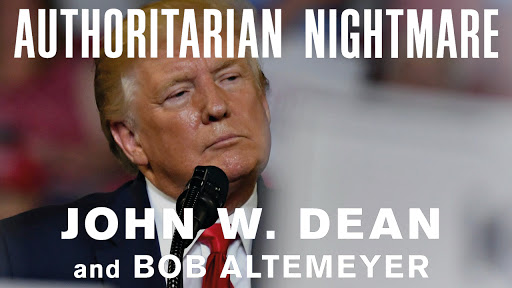
“A new book by a psychology professor and a former lawyer in the Nixon White House argues that Trump has tapped into a current of authoritarianism in the American electorate, one that’s bubbled just below the surface for years. In ‘Authoritarian Nightmare,’ Bob Altemeyer and John W. Dean marshal data from a previously unpublished nationwide survey showing a striking desire for strong authoritarian leadership among Republican voters,” Christopher Ingraham reports. “They also find shockingly high levels of anti-democratic beliefs and prejudicial attitudes among Trump backers, especially those who support the president strongly. And regardless of what happens in 2020, the authors say, Trump supporters will be a potent pro-authoritarian voting bloc in the years to come."


“Federal payments to farmers are projected to hit a record $46 billion this year as the White House funnels money to Mr. Trump’s rural base in the South and Midwest ahead of Election Day,” the Times reports. “According to the American Farm Bureau, debt in the farm sector is projected to increase by 4 percent to a record $434 billion this year and farm bankruptcies have continued to rise across the country.”

Charles Koch Continues Fighting for a Court Unfriendly to Market Regulation


NY TIMES, Christopher Leonard 

Charles Koch has activated his political network to support Judge Amy Coney Barrett’s nomination, and to tip the scales on her nomination battle in the U.S. Senate. While much of the commentary about Judge Barrett’s nomination has focused on the real prospect that Roe v. Wade may be undermined or overturned, Mr. Koch has other concerns. Judge Barrett’s nomination is the latest battleground in his decades-long war to reshape American society in a way that ensures that corporations can operate with untrammeled freedom. It may be a pivotal one.

Since the early 1970s, Mr. Koch has sought to dismantle most federal regulatory institutions, and the federal courts have been central to that battle. In 1974, Mr. Koch gave a blistering speech to a libertarian think tank, called the Institute for Humane Studies, in which he outlined his vision of the American regulatory state, and the strategy he would employ over the ensuing decades to realize that vision. On the list of government interventions he condemned were “confiscatory taxation, wage and price controls, commodity allocations programs, trade barriers, restrictions on foreign investments, so-called equal opportunity requirements, safety and health regulations, land use controls, licensing laws, outright government ownership of businesses and industries.” As if that list were not exhaustive enough, he added, “… and many more interventions.” In short, Charles Koch believes that an unregulated free market is the only sustainable structure for human society.

To achieve his goal, Mr. Koch has built an influence network with three arms: a phalanx of lobbyists; a constellation of think tanks and university programs; and Americans For Prosperity, a grass-roots army of political activists. And shaping the U.S. judiciary has been part of Mr. Koch’s strategy from the beginning. In that 1974 speech, he recommended strategy of “strategically planned litigation” to test the regulatory authority of government agencies. Such lawsuits could make their way to the Supreme Court, where justices could set precedent. In the 1990s, he focused on lower-level judges, funding a legal institute that paid for judges to attend junkets at a Utah ski resort and Florida beachfront properties; the judges attended seminars on the importance of market forces in society and were warned against consideration of “junk science” — like specific methods to measure the effects of pollution — that plaintiffs used to prove corporate malfeasance.

Mr. Koch also sought to influence the judiciary at the federal level. Between 1997 and 2017, the Koch brothers gave more than $6 million to the Federalist Society, a nonprofit institute that recruits libertarian and conservative judges for the federal judiciary, according to a tally by the activist group Greenpeace.

Mr. Koch’s efforts on the Supreme Court intensified after Donald Trump’s election, when a Republican-controlled Senate opened the way to install judges who could tip the court’s ideological balance. Americans for Prosperity undertook national campaigns to support President Trump’s previous Supreme Court nominees, Neil Gorsuch and Brett Kavanaugh. A.F.P. said the Kavanaugh campaign alone — fliers, digital ads and staff for phone banking and door knocking — ran into “seven figures.”

Now, Americans for Prosperity is doing the same for Judge Barrett. A.F.P. activists are pressuring U.S. senators in several states, with a particular eye toward vulnerable Democrats like West Virginia’s Joe Manchin. The group is also working in Alaska, where Republican Lisa Murkowski has given mixed signals about whether she is willing to vote on Judge Barrett’s nomination before the next president is elected.

Mr. Koch is selective about where he spends on politics, and the returns to reshaping the Supreme Court could dwarf the millions he’s invested. The court plays a pivotal role in determining how much regulatory power the federal government has over corporate America. The closest the Supreme Court has come to reflecting Koch’s vision for regulation is the so-called “Lochner era” of the early 20th century, during which an activist court struck down a wide-range of federal regulations on business, turning the country into a free market free-fire zone.

WIKIPEDIA

[The Lochner era is a period in American legal history from 1897 to 1937 in which the Supreme Court of the United States is said to have made it a common practice "to strike down economic regulations adopted by a State based on the Court's own notions of the most appropriate means for the State to implement its considered policies".[1] The court did this by using its interpretation of substantive due process to strike down laws held to be infringing on economic liberty or private contract rights.[2][3] The era takes its name from a 1905 case, Lochner v. New York. The beginning of the era is usually marked earlier, with the Court's decision in Allgeyer v. Louisiana (1897), and its end marked forty years later in the case of West Coast Hotel Co. v. Parrish (1937), which overturned an earlier Lochner-era decision.[4]

The Supreme Court during the Lochner era has been described as "play[ing] a judicially activist but politically conservative role".[5] The Court sometimes invalidated state and federal legislation that inhibited business or otherwise limited the free market, including laws on minimum wage, federal (but not state) child labor laws, regulations of banking, insurance and transportation industries.[5] The Lochner era ended when the Court's tendency to invalidate labor and market regulations came into direct conflict with Congress's regulatory efforts in the New Deal.

Since the 1930s, Lochner has been widely discredited as a product of a "bygone era".[1] Robert Bork called Lochner "the symbol, indeed the quintessence, of judicial usurpation of power".[6] In his confirmation hearings to become Chief Justice, John Roberts said, "You go to a case like the Lochner case, you can read that opinion today and it's quite clear that they're not interpreting the law, they're making the law", concluding that the Lochner court substituted its own judgment for the legislature's findings.[7]]

A Supreme Court that has swung hard to the right could reverse earlier decisions and issue new ones that create something like a new Lochner era. In the world of corporate law, the lodestar legal case is Chevron U.S.A. Inc. v. Natural Resources Defense Council. This case, decided in 1984, created an important legal precedent called “Chevron deference.” It holds that courts should generally defer to an agency’s interpretation of a law enacted by Congress when the law is ambiguous (provided that the agency interpretation is reasonable). This helps empower agencies like the Environmental Protection Agency to operate complex regulatory regimes, even if some details are not specifically detailed in the law. The current Supreme Court has signaled a willingness to reconsider this precedent, a move that could dramatically weaken federal regulatory agencies.

Mr. Koch and the Trump administration are united in their desire to undo the Chevron decision. Mark Holden, a board member of Americans for Prosperity, has publicly decried Chevron deference as a tool of tyranny. “The administrative state is often fundamentally at odds with our carefully crafted constitutional order,” Mr. Holden, then general counsel for Koch Industries, wrote in a 2018 op-ed essay for The Hill. He said the legal precedent gave agencies like E.P.A. so much power that they consolidated the authority of all three branches of government under one roof: Passing rules, enforcing them and then handing down verdicts in administrative courts. At the White House, a former White House counsel, Donald F. McGahn II, said the Trump administration sought to appoint Supreme Court justices who would rein in the independent agencies. Justice Gorsuch, for example, wrote multiple appeals court opinions that echoed Mr. Holden’s views.

The Koch network apparently has faith that Judge Barrett will rule in concert with these beliefs. This is something of a gamble. She has been a federal judge for only three years, leaving a short paper trail of cases and academic work from which to deduce her views. Judge Barrett’s legal writings do point toward one important idea: She, like many judges, appears to believe that some precedents which the court has created with its decisions should be overturned. Judge Barrett has publicly said that her judicial philosophy is the same as former Justice Antonin Scalia. As Lisa Heinzerling, a law professor at Georgetown, told The Washington Post, what this signals depends on which version of Justice Scalia Judge Barrett agrees with. Justice Scalia was a supporter of Chevron deference early in his tenure, but became more skeptical of it over time as he defended the power of courts to undo or weaken acts of Congress.

History shows that it is just as effective to legislate from the bench by striking down laws as by upholding them. The Lochner era proves that policy negation is just as powerful as creation, and it affects just as many lives. As Charles Koch has written and stated so often in the past five decades, there are many, many laws and programs that he would like to negate. With the nomination of Judge Barrett to the court, he appears to be closer than ever to achieving this goal.

October 12, 2020

Poet Louise Glück Awarded Nobel Prize in Literature


NY TIMES

The Nobel Prize in Literature was awarded on Thursday to Louise Glück, one of America’s most celebrated poets, for writing “that with austere beauty makes individual existence universal.”

Glück, whose name rhymes with the word “click,” has written numerous poetry collections, many of which deal with the challenges of family life and growing older. They include “The Wild Iris,” for which she won a Pulitzer Prize in 1993, and “Faithful and Virtuous Night,” about mortality and grief, from 2014. She was named the United States’ poet laureate in 2003.

At the Nobel announcement, Anders Olsson, the chair of the prize-giving committee, praised her minimalist voice and especially poems that get to the heart of family life. “Louise Glück’s voice is unmistakable,” he said. “It is candid and uncompromising, and it signals this poet wants to be understood.” But he also said her voice was also “full of humor and biting wit.”

The American poet Louise Glück, who was awarded the Nobel Prize in Literature on Thursday.

NY TIMES, DWIGHT GARNER

I have argued, in these pages, that her 1990 book, “Ararat,” is the most brutal and sorrow-filled book of poetry published in the last 30 years. (It’s contained in her collection “Poems: 1962-2012.”) It’s confessional and a bit wild, I wrote, comparing it to Bob Dylan’s “Blood on the Tracks.”

One of the things to love about Glück’s poetry is that, while her work contains many emotional registers, she is not afraid to be cruel — she confronts the monsters in herself, and in others, not with resignation and therapeutic digression but with artery-nicking knives.

Glück’s free verse is exacting and taut and rhetorically organized. Thematically, the mirepoix is composed of family, childhood, love, sex, death, nature, animals. Her classical allusions are deft. She is a serious poet of the appetites. Even when she ostensibly writes about food, she is writing about 11 other things at the same moment. A poem called “Baskets” includes these lines:

I take my basket to the brazen market,
to the gathering place,
I ask you, how much beauty
can a person bear? It is
heavier than ugliness, even the burden
of emptiness is nothing beside it.
Crates of eggs, papaya, sacks of yellow lemons —
I am not a strong woman. It isn’t easy
to want so much, to walk
with such a heavy basket,
either bent reed, or willow.

She has become a profound and witty poet about growing old. In “Averno,” she writes about the speaker’s children:

I know what they say when I’m out of the room.
Should I be seeing someone, should I be taking
one of the new drugs for depression.
I can hear them, in whispers, planning how to divide the cost.

And I want to scream out
you’re all of you living in a dream.

Bad enough, they think, to watch me falling apart.
Bad enough without this lecturing they get these days
as though I had any right to this new information.

Well, they have the same right.

They’re living in a dream, and I’m preparing
to be a ghost.

In another poem, she asks, “Why love what you will lose?” She answers her own question: “There is nothing else to love.”