November 1, 2020

NY State Senate Races Could Make Or Break A Democratic Supermajority

GOTHAMIST

People wait in a line to cast ballots during early voting in the United States' presidential election outside a community center in the suburban community of West Hempstead, New York, where State Senator Kevin Thomas is running against Republican Dennis Dunne.
People wait in a line to cast ballots during early voting in the United States' presidential election outside a community center in the suburban community of West Hempstead, New York, where State Senator Kevin Thomas is running against Republican Dennis Dunne. JUSTIN LANE/EPA-EFE/SHUTTERSTOCK

On Tuesday, New York will vote overwhelmingly for Joe Biden over Donald Trump. A Republican hasn’t won the state since Ronald Reagan’s re-election in 1984 and Trump, a son of Queens largely reviled in the place where he grew up, isn’t going to break that trend.

Down the ballot, however, there could be drama. Several Congressional races in the suburbs of New York City—and one within the five boroughs—can be won by either party’s candidate. Upstate, a handful of seats are in play too, as Democrats seek to benefit from a massive turnout surge. Beyond Congress, though, is the real contest that could determine the future of our imperiled city and the state as a whole: the battle for control of the State Senate.

Control, on its own, is not at stake. After Democrats stormed to the majority in the 2018 midterms, they now hold an unbreakable 40-23 advantage over Republicans in the upper chamber. The real fight is over whether Democrats can net two more seats and form what would be the first supermajority in modern political history, able to override vetoes from Governor Andrew Cuomo.


Why does this matter? Since the outbreak of the COVID-19 pandemic in March, Cuomo has exerted inordinate power over the legislature, winning new budgetary powers and withholding funds from state agencies, public schools, and universities. As New York’s economy freefalls, Cuomo has held out hope that Republicans in Congress and President Donald Trump would send tens of billions of dollars in local aid to the state.

This has not happened. If Joe Biden wins and Democrats take control of the Senate, a bailout may not materialize before next year. In the interim, local governments are reeling and private businesses are shutting down. Democrats in the legislature have hoped to raise new revenue through tax increases on the wealthy; Cuomo, fearful rich residents could flee the state, has rejected all calls for new taxes.


If Democrats win a supermajority in the State Senate, the first priority, lawmakers say, will be forcing Cuomo’s hand on raising taxes. There are a host of proposals on the table, including taxes for multimillionaires, novel wealth taxes, a stock transfer tax, or a tax on second, largely vacant, homes.


“The leaders of both legislative houses are clear that the Senate and Assembly support requiring the wealthiest to pay more to help solve our budget crisis,” said State Senator Michal Gianaris, the deputy leader of the chamber. “A Senate supermajority will increase our negotiating power to make that vision a reality.”


If Democrats net two more seats—or even more—it will be far more difficult for Cuomo to reject a bill raising taxes on the wealthy, since Republican lawmakers would no longer be needed to override a veto. Conversely, for Republicans and maybe even a Democrat-skeptical Cuomo, the loss of such leverage would spell doom for any hope of conservative power in government.


Democrats have many paths to a supermajority. A wave of retirements by longtime Republican senators has opened up new terrain, particularly in districts that Hillary Clinton won four years ago.


While Trump at the top of the ticket can drive Republican turnout, there are many more registered Democrats in New York, and hatred of Trump will likely bring them to the polls. A historic turnout spike could damage Republicans up and down the state.

“Democrats are mostly competing to win seats that Hillary Clinton won in 2016, but have been represented by longtime Republican incumbents now abandoning ship,” said Benjamin Rosenblatt, a Democratic consultant. “The national environment is undoubtedly favoring Democrats right now.”


If Democrats perform well enough on Election Day, they can also have total control of the decennial redistricting process, redrawing Senate districts that had been traditionally shaped to protect Republican incumbents.


For Republicans, there is hope that millions in outside expenditures from Ronald Lauder, a billionaire ally of Cuomo, and the Police Benevolent Association could tip the scales back their way. Both the PBA and Lauder, who is funding an independent expenditure committee called Safe Together New York, have attacked Democratic state senators and candidates in swing states for supporting bail and criminal justice reform laws they say have fueled a spike in murders and shootings. (There is no evidence of any direct link.)


Many counties that hosted Trump rallies had a significant increase in Covid-19 cases

 Trump Rallies Are Often Followed by Increases in Local COVID-19 Cases -  Center for American Progress


CNN By Nadia Kounang

(CNN)A CNN investigation of 17 Trump campaign rallies finds that 14 of the host counties -- 82% of them -- had an increased rate of new Covid-19 cases one month after the rally.

The 17 rallies occurred between August 17 and September 26. CNN evaluated the rate of new daily cases per 100,000 residents at four weeks before the rally, on the rally date, and four weeks after the rally at the county level and at the state level.


Of the 14 host counties that had increased infection rates, eight of the counties had declining rates of infection in the month before the rally. The other six counties already had increasing rates of infection in that preceding month.
CNN's analysis also found that in 10 counties, the new rates of infection were growing faster than the overall rate for the state.
    Some of the rallies that were surveyed included the Trump campaign's September 12 rally in Minden, Nevada.


    Early voting reaches record numbers, nears 2016 total votes in many states


    Tom Williams/CQ-Roll Call via Getty Images

    vox

    • As of Monday morning, more than 94 million ballots have been cast already, representing more than two-thirds of the voting total from 2016. More than 34 million of those votes were cast in person. [CNBC / Lauren Feiner]
    • It appears that calls to get out the vote early are being heeded. After just 57.1 percent of eligible voters cast ballots in 2016, turnout could reach record levels this year, with many states’ early voting numbers nearing their total votes from four years ago. [Vox / Jen Kirby and Roni Molla]
    • Texas, which has historically had among the lowest voter turnout rates, has already received more early votes than it did total votes in 2016. This is especially surprising considering Gov. Greg Abbott earlier this month restricted drop-off boxes for mail-in ballots to one per county. [Vox / Nicole Narea]
    • Florida is also seeing high turnout, especially among young voters. Research from Tufts University shows that more than four times as many young voters in the state have cast early votes than in 2016. [WINK / Andryanna Shepard and Jack Lowenstein]
    • Young voters as a whole seem more enthusiastic this year than in past elections. Eligible voters under 30 could break their record turnout of 48 percent, set in 2008 when Barack Obama was elected president. Turnout among young voters was low in 2016. [Washington Post / Michelle Ye Hee Lee]
    • On the surface, it would seem that this would be good news for Democrats, particularly in swing states like Florida. But in Miami-Dade County, Democrats are voting at lower rates than Republicans and lower rates than 2016, when President Donald Trump carried Florida. [Politico / Marc Caputo and Matt Dixon]
    • Overall, early voting is a strong indicator of overall turnout, but does not really tell us much about the results. Democrats have an edge in early voting, but their lead is narrowing, and Republicans are more likely to vote in person on Election Day. [Vox / Jen Kirby and Rani Molla]
    • Black voters will be a key demographic — they turned out in lower numbers in 2016 than in 2012. They could make the difference in states like Wisconsin, Michigan, and Pennsylvania, but they will have to overcome efforts to suppress their votes. [Vox / Sean Collins]
    • Biden is counting on strong Black turnout in Milwaukee, Detroit, and Philadelphia to win back the three critical states Hillary Clinton lost in 2016. But some polls have suggested that Trump’s share of the Black vote against Biden will be higher than it was against Clinton. [AP / Kat Stafford]
    • The national record for voter turnout was set in 1908, but that could be broken this year. Data from the US Elections Project predicts that about 150 million ballots will be cast in 2020, representing 65 percent of eligible voters. [The Guardian / Joan E Greve and Maanvi Singh]

    October 31, 2020

    SEAN CONNERY


    Photo by Anne Leibowitz

    DAVID HUDSON, CRITERION

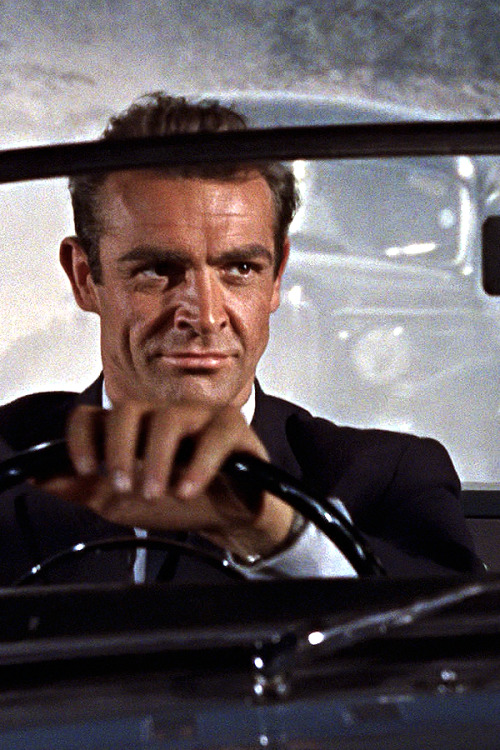
    In a primer for the New York Times on the seven films featuring Sean Connery as the first and, in the eyes of most, best James Bond, Thomas Vinciguerra notes that Connery once referred to the role that made him an international star as “a cross, a privilege, a joke, a challenge. And as bloody intrusive as a nightmare.” Nearly every tribute and remembrance that has appeared since Connery passed away on Saturday—he’d turned ninety in August—emphasizes the richness of a filmography that extends far beyond the character Ian Fleming created in a series of novels and short stories beginning in 1953, Agent 007 of Her Majesty’s Secret Service. “But for an enduring, vodka martini-soaked franchise built on one man’s tightly wound toughness, womanizing charisma, tongue-in-cheek one-liners and exquisite tastes,” writes Vinciguerra, “Connery was the Fleming word made cinematic flesh.”

    Thomas Sean Connery, born to a Catholic factory worker and a Protestant cleaning woman, spent the first nights of his life sleeping in the bottom drawer of a cupboard in a modest flat in Edinburgh. By the time he was eight, he was rising before the sun to deliver milk before school and then working in a bakery in the evenings. At thirteen, he left school for a series of odd jobs—mixing cement, laying bricks, driving trucks, polishing coffins. At sixteen, he joined the Royal Navy and got himself a couple of tattoos, one of them reading “Scotland Forever.” In his late teens, he started working out and posing for students at the Edinburgh College of Art. “On the one hand,” wrote Geoffrey Macnab in a piece on these early years for Sight & Sound in 1992, “Connery’s image is of a dour, reserved man with a Calvinist attitude towards work who achieved success through sheer toil. On the other, he is an exhibitionist who became famous by offering his body as a fetish object.”

    It was at a bodybuilding competition in London in 1953 that Connery caught wind of auditions for a production of South Pacific. He scored a small role in the chorus and caught the bug. An American actor in the cast, Robert Henderson, advised him to read Stanislavski on acting as well as the complete works of Shakespeare and Shaw, Ibsen and Wilde, and Joyce and Proust. He began to land more significant roles on the stage and his first small parts on the screen. The breakthrough came in 1957, when Jack Palance had to back out of a live BBC broadcast of Rod Serling’s Requiem for a Heavyweight and Connery stepped in to take the lead. Later that year, he worked for the first time with director Terence Young on a forgettable feature, Action of the Tiger.


    Dr. No

    When Young signed on to direct the first Bond movie, Dr. No (1962), he lobbied producers Albert Broccoli and Harry Saltzman hard on behalf of Connery. Broccoli and Saltzman were thinking more along the lines of a Cary Grant or a David Niven for the role, and Ian Fleming agreed that Connery seemed a little too rough around the edges. But Broccoli’s wife, Dana, and Fleming’s girlfriend, Blanche Blackwell, assured the men that Connery seethed with sexual charisma. Young taught Connery to combine that charisma with sophistication, teaching him how to wear the right clothes, how to select, order, and then eat and drink the proper dishes, wines, and of course, the martinis, “shaken, not stirred.”

    Connery played James Bond in the first five 007 films: Dr. No (1962), From Russia With Love (1963), Goldfinger (1964),


    Thunderball (1965) [above],


    and You Only Live Twice (1967). He returned for Diamonds Are Forever (1971) [above] and Never Say Never Again (1983).

    Sheila O’Malley has pulled up Oriana Fallaci’s 1965 interview with Connery in which he found himself having to insist that he was “not in the least ashamed of the Bond movies. They’re amusing, intelligent, each one is more exacting than the last, each one is of better quality than the last.” And they were a lot of work. If he “hadn’t acted Shakespeare, Pirandello, Euripides, in short, what is classed as serious theater, I should never have managed to play James Bond. It’s not so easy, that role. It’s a role for a professional.” In the New York Times, Aljean Harmetz quotes Sidney Lumet, with whom Connery worked on five films. “Nonprofessionals just didn’t realize what superb high-comedy acting that Bond role was,” said Lumet. “It was like what they used to say about Cary Grant. ‘Oh,’ they’d say, ‘he’s just got charm.’ Well, first of all, charm is actually not all that easy a quality to come by. And what they overlooked in both Cary Grant and Sean was their enormous skill.”

    Another 1965 interview, this one for Playboy, would shadow the rest of Connery’s life and career. “I don’t think there is anything particularly wrong about hitting a woman,” he said. “An openhanded slap is justified—if all other alternatives fail and there has been plenty of warning. If a woman is a bitch, or hysterical, or bloody-minded continually, then I’d do it.” When Barbara Walters asked him about these comments in 1987, he doubled down. And Connery’s first wife, the actress Diane Cilento, recalled his physically abusing her in her 2006 autobiography, My Nine Lives.

    In an excellent, tough-but-fair remembrance at RogerEbert.com, Matt Zoller Seitz writes that “Connery’s brutish persona offscreen will be forever fused to his image as a leading man: patriarchal, reactionary, a lad, a boss; a self-satisfied asshole, often a bully; the best friend, the big brother, the mentor; the taskmaster and shit-stirrer; a man who considers fists an extension of words; and, virtually without exception, the type of person who rarely questions himself, and does not take kindly to being questioned.”
    Mark Rutland (Connery) marries Marnie Edgar (Tippi Hedren), who he doesn’t know is a thief and a liar. After looking into her past with a private detective, he tries to help her solve her psychological problems and mental issues.

    Keith Phipps, writing for GQ, finds that Connery was “ideally cast” in Alfred Hitchcock’s Marnie (1964), “in which the abuse and sexual domination beneath the surface of so many Hitchcock films comes bubbling to the surface. In role after role, he brought out the hardness and meanness at the core of his characters Marnie appeared after the second Bond movie, From Russia with Love (1963), and Connery took the role in part to avoid being typecast as the suave spy.
    Set during World War II, The Hill centers on five prisoners who are new to a military prison camp in a Libyan desert who struggle to survive in the face of brutal punishment and sadistic guards.

    After Goldfinger (1964), Connery played a British officer sent to a prison camp for deserters in Sidney Lumet’s World War II drama The Hill (1965), which Glenn Erickson has called “one of the roughest, most credibly brutal dramas ever about the downside of army discipline.” The Los Angeles Times’ Justin Chang observes that there was nearly always “a steely, sinister edge to Connery’s screen presence, a hint of sadism beneath all his beauty, wit, and physical grace. Not enough filmmakers tapped into that darkness over the years, though Lumet was, again, an exception:
    In 1973’s The Offence, (Lumet again) Connery played a detective who brutally confronts a child predator for reasons that become ever more disturbingly murky in one of the actor’s darkest, most frightening performances. It’s not too many people’s favorite Sean Connery, I imagine, but it’s one that deserves to be remembered.”
    The Man Who Would Be King (1975) follows Daniel Dravot (Connery) and Peachy Carnahan (Michael Caine), two ex-soldiers living in India under British rule who start to feel that the country is too small for them. They head off to Kafiristan and become kings in a land where no white man as set foot since Alexander. The film was nominated for four Academy Awards.

    In John Huston’s The Man Who Would Be King, Connery and his good friend Michael Caine play former British Army officers who wander into an abandoned swath of Afghanistan where the locals take Connery’s Daniel Dravot for a god. “It’s both an epic romp filled with thrills, spills, and derring-do, and a tongue-in-cheek take on the empire’s less-than-moral misadventures in foreign lands,” writes Rolling Stone’s David Fear. “Connery lets you see how the good fortune his con-artist colonialist has stumbled on warps him, and eventually sends him to a tragic end.”

    Richard Lester’s Robin and Marian (1976) is a lovely yet almost mournful romantic swoon in which Connery’s aging Robin Hood reunites with his long lost love, Maid Marian, played by Audrey Hepburn, For Vulture’s Bilge Ebiri, this entire period of Connery’s career “now feels like his wilderness years, as if the manly ideal he represented in the 1960s had been overtaken by a more sinister and uncertain climate, leaving him behind his times.” But in the 1980s, “the man came back, an elder statesman finally embracing his age, and actually showing some versatility.”
    A Bridge Too Far' (1977) In September 1944, Allies attempted to capture several strategically important bridges in the Netherlands in the hope of breaking German lines known as Operations Market Garden. However, the poor planning resulted in failure. The film was adapted from Cornelius Ryan's book of the same name.

    In 1997, Mark Cousins filmed an interview with Connery for the BBC and asked him if his comeback might be credited to a new agent. “No,” smiled Connery slyly, “otherwise you would have filmed him.”

    The Name of the Rose (1986), Set in 1327, monks are convinced the apocalypse is coming after the death of Benedictine Abbey. William Baskerville (Connery) and his young novice must race against time to prove the innocence of the unjustly accused and avoid the wrath of the Holy Inquisitor Bernardo Gui.

    During the 1920s prohibition in Chicago, Federal Agent Eliot Ness (Kevin Costner) sets out to stop Al Capone (Robert De Niro). He chooses four men to battle Capone and his empire. Connery won an Academy Award for best actor in a supporting role for his portrayal of a tough, Irish cop who mentors Ness. The film was nominated for three additional Academy Awards.

    The 1980s saw Connery winning a Bafta for his performance in Jean-Jacques Annaud’s adaptation of Umberto Eco’s The Name of the Rose (1986), and an Oscar for his role in Brian De Palma’s The Untouchables (1987).

    Indiana Jones (Harrison Ford) learns that his father, Henry Jones Sr. (Connery), a Holy Grail scholar, has disappeared while on a quest to find the ancient artifact and sets out to find them both. The movie was nominated for three Oscars and won for best sound effects.

    Connery then won over a fresh wave of fans playing Harrison Ford’s father in Indiana Jones and the Last Crusade (1989). “Steven Spielberg’s decision to cast Connery as Professor Henry Jones in the third Indiana Jones movie might have come off as a stunt if the veteran actor hadn’t been such a perfect fit—instead, it comes off like a coup,” writes David Fear.

    In November 1984, the Soviet Union creates a new nuclear submarine that runs silently underwater. The captain’s goal is to take the submarine to the United States to prevent the Russians from using it to start a war. The film was nominated for three Oscars, winning for best effects.

    The hits kept coming in the 1990s. Connery played a Soviet naval captain—with a Scottish-tainted accent, of course—in John McTiernan’s The Hunt for Red October (1990);

    a British publisher in Moscow who finds himself working for the Secret Intelligence Service and falling for Michelle Pfeiffer’s Katya Orlova in Fred Schepisi’s 1990 adaptation of John le Carré’s novel, The Russia House;

    Stanley Goodspeed (Nicolas Cage), a biochemist who works for the FBI, finds out that San Francisco’s Alcatraz Island has been taken hostage. He teams up with with the only person who can show him the inside of the prison, a prisoner named John Patrick Mason (Connery) who escaped from Alcatraz three decades earlier.

    SAS Captain John Patrick Mason, the only person to have ever escaped Alcatraz, in Michael Bay’s The Rock (1996). The plot of The Rock “hinges on an outrageous villainous plot, a ludicrous heroic mission, and a protagonist whose stature is downright mythic,” writes Nick Schager at the Daily Beast. “To that end, it’s the perfect late-career role for Connery.”

    In the Hollywood Reporter, Bay looks back on nervously shooting his second movie with a legend. At one point, he told Connery that Disney was getting all over his case for running two days over schedule. So Connery helped him arrange a meeting. “In classic Sean Connery style,” writes Bay, “he belts out in his Scottish brogue: ‘This boy is doing a good job, and you’re living in your Disney Fucking Ivory Tower and we need more fucking money!!’ Without missing a beat, they responded. ‘OK. How much?’”


    Brian Koppelman, the cocreator of Showtime’s Billions, tells another story about his and cowriter David Levien’s involvement in a movie that Connery would have starred in if the director hadn’t infuriated him. What comes through first is just how seriously hard Connery worked on drafts and rewrites before he would approve a screenplay. Second, the man was funny. A few months after Connery bailed on the project, Levien paid him a call in the Bahamas. “When the director’s name comes up,” writes Koppelman, “Mr. Connery gives us one last great line, ‘Ah, him, that guy, he’s a bucket of smoke.’” This was 2004. Two years later, as he received the American Film Institute’s Lifetime Achievement Award, Connery announced that he was retiring from acting. “He’s gone now,” writes Keith Phipps, “leaving only the performances behind, a collection of classic turns we can watch with a love that’s both unsettling and undeniable.”


    October 30, 2020

    Despite GDP growth, polls suggest Trump’s advantage on economic stewardship is narrowing


    WASHINGTON POST DAILY 202   /   WASHINGTON POST

    President Trump’s failure to negotiate a coronavirus relief deal with Congress before the election, record-breaking surges in new covid-19 infections, a tanking stock market, declining consumer confidence in battleground states and ominous layoff announcements appear to have taken at least a marginal toll on what has been his biggest polling advantage amid the pandemic: perceived competency at managing the economy.

    A decline in the stock market has been one of several “October surprises” in this election. The Dow Jones industrial average fell 943 points Wednesday, closing about 9 percent lower than at the start of last month. The selloff has been driven by the rising number of new infections and the growing recognition that a gridlocked Washington will not deliver coronavirus relief anytime soon. The markets opened flat on Thursday after the GDP and jobs numbers were released because they were in line with expectations.

    A Washington Post-ABC News poll released Wednesday showed Trump’s advantage on the economy receding in a vital swing state. In Wisconsin, 47 percent approve of how the president is handling the economy and 50 percent disapprove. Last month, the same poll had Trump’s economic rating net positive by seven points. “

    The U.S. economy grew at 7.4 percent between July and September, recovering about two-thirds of its losses during the first half of the year. This is a number Trump will ballyhoo for the five days remaining until the election, but the gross domestic product is now about the size it was in the first quarter of 2018. Growing hospitalizations and deaths from the virus, combined with uncertainty about when another stimulus bill might pass, put dark storm clouds above the economy.

    For the economy to recover all that was lost in the previous quarter, third-quarter GDP would have had to surge and hit 10 percent, and even more to make up for smaller first-quarter losses,” Rachel Siegel and Andrew Van Dam report. “Officials such as Federal Reserve Chair Jerome H. Powell have long said that a robust and stable recovery depends on controlling the pandemic. … Economists put the risk of a double-dip recession later this year or early next year at 30 to 35 percent, depending on the course of the virus, the prospects of another stimulus package and any trade tensions with China.”

    Another 751,000 people applied for jobless claims last week, down about 40,000 from the week before, in the final unemployment report before the election. “Claims for Pandemic Unemployment Assistance, for gig and self-employed workers, went up slightly, to 359,000,” Eli Rosenberg reports. “All told, there were about 22.6 million people claiming some form of unemployment insurance … The economy has begun to flash more warning signs in recent weeks. Companies announcing layoffs in recent weeks include aerospace giant Raytheon, financial services company Charles Schwab, and Disney World. … An increasingly large group of people are transitioning off regular state unemployment insurance to a temporary federal program for people whose state benefits have expired — a sign of the growing duration of joblessness for many.”


    Speaker Nancy Pelosi (D-Calif.) revealed Thursday that she and Treasury Secretary Steven Mnuchin have remained farther apart on key issues in their negotiations for a stimulus package than many believed. 
    A letter to Mnuchin, released to the media, casts doubt on whether a deal can get done at all during the lame-duck session. “Pelosi listed a litany of outstanding issues including state and local aid, school funding, child care money, tax credits for working families, unemployment insurance aid, and liability protections for businesses sought by the administration but opposed by Democrats,” Erica Werner reports. “She also said that she was still awaiting a final answer from the administration on agreeing to the Democrats’ language on a national coronavirus testing strategy – something Mnuchin had said on Oct. 15 that he was prepared to accept subject to minor edits.”

    Trump is trying to make this election more about jump-starting the economy than controlling the pandemic, which White House Chief of Staff Mark Meadows said over the weekend that they are not going to be able to do. “This election is a choice between a Trump boom and a Biden lockdown,” Trump said on Wednesday in Arizona.

    Ultimately, the pandemic seems to be a higher priority in the minds of voters than the economy right now. Monmouth University poll of Georgia on Wednesday showed Biden ahead 50 percent to 45 percent. Asked who they trust more to create jobs, Trump lead Biden by 10 points (49 percent to 39 percent.) Asked who they trust more to handle the pandemic, Biden led by 12 points: 49 percent to 37 percent.

    Trump in recent days has touted the stock market as central to his 2020 reelection bid, frequently pointing to Americans’ 401(k) accounts. … The stock market’s sharp decline clouds this characterization,” Jeff Stein reports. “Even some of the president’s allies acknowledge the challenge posed by the market decline, arguing that Trump must continue to blame Pelosi for the absence of a stimulus agreement. ‘It’s a big, big decline. … It’s very ugly,’ said Stephen Moore, an outside economic adviser to the White House. ‘Trump has to keep saying ‘Pelosi blocked the plan because she wanted the blue state bailout.’’ … [But] Trump kept trying to cancel and then un-cancel the negotiations, sometimes multiple times in a week. … 

    Trump won the presidency on a pledge to engineer an economic turnaround in the Rust Belt. He hasn’t delivered,” Tory Newmyer writes in today’s Finance 202. “The forces weighing on the region predate Trump, but the president’s trade wars have also exacerbated pain for the farmers and manufacturers that make up key engines of the local economies. … Twenty-three of [Wisconsin’s] 72 counties flipped from supporting Obama in 2012 to Trump in 2016. They have not fared well, even before the pandemic struck: Just over a third experienced job growth from the first quarter of 2018 to that same period this year, according to data from the Economic Innovation Group. … Compared to similar voters in five other swing states, consumer confidence among those in Michigan ‘saw the largest drop from the beginning of the year to Oct. 15 at a 36.4-point decline,’ a Morning Consult analysis finds.”

    Across the industrial belt from Wisconsin to Pennsylvania, private job growth from the first three months of 2017 through the first three months of 2020 lagged the rest of the country — with employment in Michigan, Wisconsin and Ohio growing 2% or less over that time compared to a 4.5% national average,” according to Reuters.

    Trump’s 25 percent tariffs on foreign-made steel did not fuel the revival for American steel that the president promised, the Wall Street Journal reports. “Initial job growth withers as demand and prices sink; older mills face a dim future.” 

    It will get worse before it gets better: States now face their biggest cash crisis since the Great Depression. “Nationwide, the U.S. state budget shortfall from 2020 through 2022 could amount to about $434 billion,” the WSJ reports. “The estimates [from Moody’s Analytics] assume no additional fiscal stimulus from Washington, further coronavirus-fueled restrictions on business and travel, and extra costs for Medicaid amid high unemployment. That’s greater than the 2019 K-12 education budget for every state combined, or more than twice the amount spent that year on state roads and other transportation infrastructure … Even after rainy day funds are used, Moody’s Analytics projects 46 states coming up short, with Nevada, Louisiana and Florida having the greatest gaps as a percentage of their 2019 budgets. … Hawaii, for example, is expecting fewer than half the visitors it took in last year in 2020, and state officials forecast its general fund revenues won’t recover to pre-pandemic levels until its 2025 fiscal year.”

    The state of Michigan’s budget director, Chris Kolb, calculated that even if he eliminated 12 state departments—including education, environment and treasury—and used up every penny in state reserves, Michigan would still be short $1 billion needed to balance his budget. “We really have uncharted waters in front of us,” Kolb told the Journal. “The waves appear to be getting more choppy.”


    Joe Biden countered that America must get control of the contagion in order to revitalize the economy. The Democratic nominee has emphasized the uneven nature of what he calls a K-shaped recovery. The rich are bouncing back strong while the suffering of the poor only gets worse. 

    “Even if I win, it’s going to take a lot of hard work to end this pandemic,” Biden said in Wilmington, Del. “I’m not running on the false promise of being able to end this pandemic by flipping a switch. … We will deal honestly with the American people, and we’ll never, ever, ever quit. That’s how we’ll shut down this virus so we can get back to our lives a lot more quickly than the pace we’re going now.”

    The Post-ABC polling showed Biden leading 57 percent to 40 percent among likely voters in Wisconsin and 51 percent to 44 percent in Michigan. When it comes to handling the pandemic, Biden is trusted more than Trump by double digits in both states.


    Gloom settles over Europe as days darken and the virus surges. 

    “The clocks were dialed back an hour across Europe this week, and the long nights come early. The hospitals are filling up as the cafes are shutting down. Governments are threatening to cancel Christmas gatherings,” William Booth, Chico Harlan, Loveday Morris and Michael Birnbaum report. “As new coronavirus infections surge again in Europe, breaking daily records, the mood is growing dark on the continent — and it’s not even November. … Germany and France on Wednesday joined those announcing shutdowns to try to get the virus under control. The new measures are less restrictive than in the spring, and yet they are facing more pushback. People are no longer so willing to bunker down in their little apartments, stepping out in the evenings to applaud courageous nurses. Nobody is singing arias from their balconies anymore. 

    "Europeans remain scared of covid-19, but they are just as scared about jobs. They’re fried — and growing angry and belligerent, too. … Anti-riot squads in Italy this week fired tear gas to disperse violent crowds in Milan, who were protesting new lockdown measures. In Turin, demonstrators hurled gasoline bombs at police. In Germany, the streets swelled with protesters from the hospitality industry, while Chancellor Angela Merkel met with regional leaders to debate the partial lockdown, in which restaurants are closed but schools are staying open.” (A man shouting “Allahu akbar” killed three in a knife attack this morning at a church in Nice, France. President Emmanuel Macron is heading to the scene.)

    VOX

    • The presidential election matters less to the stock market than it might seem. Data shows the market actually cares more about which party controls Congress than the White House, and stocks typically do best when the two chambers of Congress are controlled by different parties. [USA Today / Jessica Menton]


    LETTERS FROM AN AMERICAN

    Trump’s attempt to seed another “investigation” into his rival through the “discovery” of a compromising laptop has fizzled. Today, NBC News noted that a document purporting to show Democratic candidate Joe Biden’s son Hunter Biden in a corrupt relationship with Communist leaders in China was actually ghost written by an academic and published under a fake identity.

    Meanwhile, a record number of 80 million early ballots have already been cast, and we are all parsing the polls for clues about who will emerge as the winner of the 2020 election.

    What is clear is that, as we approach the end of the campaigns, each is reflecting its presidential candidate.

    Trump’s willingness to defend his own interests at others’ expense is showing in the final days of his campaign. It is showing generally, with his willingness to expose his supporters to coronavirus infections at his rallies. It is showing more specifically with Trump’s refusal to support endangered Republican Senators who have stood by him and lost support because of it. At Trump’s recent visit to Maine, he did not mention Senator Susan Collins, who is in a tight race with her Democratic challenger, Sara Gideon.

    In Arizona, Trump mocked vulnerable senator Martha McSally. “Martha, just come up fast. Fast. Fast. Come on. Quick. You got one minute!” Trump said, as the senator rushed to the stage for some airtime with the president. “One minute, Martha! They don't want to hear this, Martha. Come on. Let’s go. Quick, quick, quick. Come on. Let’s go.” Trump gave McSally just 60 seconds to speak before turning the microphone over to other national figures.


    Donald Trump Jr. says covid-19 deaths are at 'almost nothing' on a day when  more than 1,000 Americans died - The Washington Post

    The campaign continues to downplay the coronavirus. Tonight, campaign spokesperson Donald Trump, Jr., told Fox News Channel personality Laura Ingraham that the number of deaths from Covid-19 is now “almost nothing, because we’ve gotten control of this.” But today alone, at least 951 Americans died of the coronavirus, and more than 91,000 new cases were reported. Our overall official death total is approaching 230,000. “If things do not change, if they continue on the course we’re on, there’s gonna be a whole lot of pain in this country with regard to additional cases and hospitalizations, and deaths,” Dr. Anthony Fauci said Wednesday night.

    Trump has begun to muse about losing the election, and said he would like simply to drive away, or fly away, from the burden of the presidency. Yesterday, retired Brigadier General Peter B. Zwack wrote that, with his immense financial debts and pending legal issues, “Trump appears to be a classic flight risk.”


    Still, though, the president continues to fire up his base with accusations that Democrats are engaging in voter fraud, and that counting ballots after November 3 will mean a stolen election. His rhetoric is so worrisome that business owners in Washington, D.C., are boarding up their windows and Walmart is pulling guns and ammunition from its shelves (although it will continue to sell them on request).

    Tonight, both candidates are in Florida, and while Trump could have focused on today’s economic report showing 7% GDP growth in the third quarter, he went all-in with attacks on Hunter Biden and mused about losing.

    In contrast to Trump’s erratic personality-driven campaign, Biden’s campaign remains smooth and professional. Unlike the Trump campaign, it has plenty of money, and is running fun, moving, and professional ads on social media emphasizing unity and healing for the country.

    In addition to the many other groups breaking in Biden’s favor, early data suggests that young Americans are turning out to vote in record numbers. About 63% of voters from ages 18 to 29 say they support Biden, while only about 25% support Trump.

    While the polls are suggesting there is little movement in the race, there has been a shift toward Biden in Georgia in the past few days. That shift will likely get a boost from an astonishing moment in a hard-hitting debate last night between embattled incumbent Senator David Perdue, a Republican, and his challenger, Democrat Jon Ossoff.

    Watch: Sen. David Perdue labeled a 'crook' by rival Jon Ossoff in viral  Georgia debate

    After Perdue attacked Ossoff for taking money from out-of-state donors who support a “radical socialist agenda,” Ossoff countered with a devastating takedown: “Perhaps Senator Perdue would have been able to respond properly to the Covid-19 pandemic if you hadn’t been fending off multiple federal investigations for insider trading,” he said. “It’s not just that you’re a crook, Senator, it’s that you’re attacking the health of the people that you represent.” Perdue seemed frozen. The clip has gone viral, and today Perdue pulled out of the final debate scheduled between him and Ossoff. Instead he will join Trump for a rally that night.


    Biden and Harris are reaching out to Hispanic voters, whose support will matter a lot in southern states. In Florida tonight, at a drive-in event, Biden hammered on Trump’s approach to the pandemic, called for racial justice, and promised that he will not be too hard on Cuba or too soft on Nicolas Maduro, Venezuela’s president. Biden got a boost today from an op-ed in the Miami Herald by Hispanic business and economic leaders who endorsed Biden as the candidate who would build “a stronger, more dynamic economy that works for everyone.” With Hispanic voters extra-concerned about charges of “socialism,” the op-ed’s authors emphasized that Biden is the candidate of “free enterprise.”

    Today, Biden wrapped together his pitch to Hispanic voters, an appeal to morality and a better future, and an illustration of how a Biden presidency will be different than its predecessor. He promised that, if he is elected president, he will immediately create a task force to reunite the families of the 545 immigrant children still separated from their parents.

    —-

    Notes:

    https://www.nbcnews.com/tech/security/how-fake-persona-laid-groundwork-hunter-biden-conspiracy-deluge-n1245387

    https://www.npr.org/2020/10/26/927803214/62-million-and-counting-americans-are-breaking-early-voting-records

    https://www.cnn.com/2020/10/29/politics/donald-trump-senate-election-2020/index.html

    https://www.politico.com/amp/news/magazine/2020/10/28/is-president-donald-trump-a-flight-risk-433313

    https://www.usatoday.com/story/news/politics/elections/2020/10/29/businesses-boarding-up-anticipation-post-election-violence/6069157002/

    https://www.reuters.com/article/us-usa-election-early-voting/record-breaking-early-voting-in-u-s-election-tops-80-million-idUSKBN27E37U

    https://www.cnn.com/2020/10/29/politics/donald-trump-senate-election-2020/index.html

    https://www.reuters.com/article/us-walmart-guns-idUSKBN27E3HX

    https://www.reuters.com/article/us-health-coronavirus-usa/white-house-advisers-warn-of-unrelenting-covid-19-spread-in-u-s-midwest-west-idUSKBN27E1YT

    https://www.washingtonpost.com/politics/youth-early-vote/2020/10/29/506db1b6-1889-11eb-aeec-b93bcc29a01b_story.html

    https://www.nytimes.com/live/2020/10/29/us/trump-biden-election

    https://www.miamiherald.com/opinion/op-ed/article246808297.html

    https://www.cnn.com/2020/10/29/politics/georgia-senate-debate-ossoff-perdue/index.html
    https://www.cnn.com/2020/10/29/politics/biden-immigrant-children/index.html